Why Am I Still Tired After 8 Hours of Sleep?
Eight hours is an average target. Four other things decide whether you wake up rested, and the clock measures none of them.
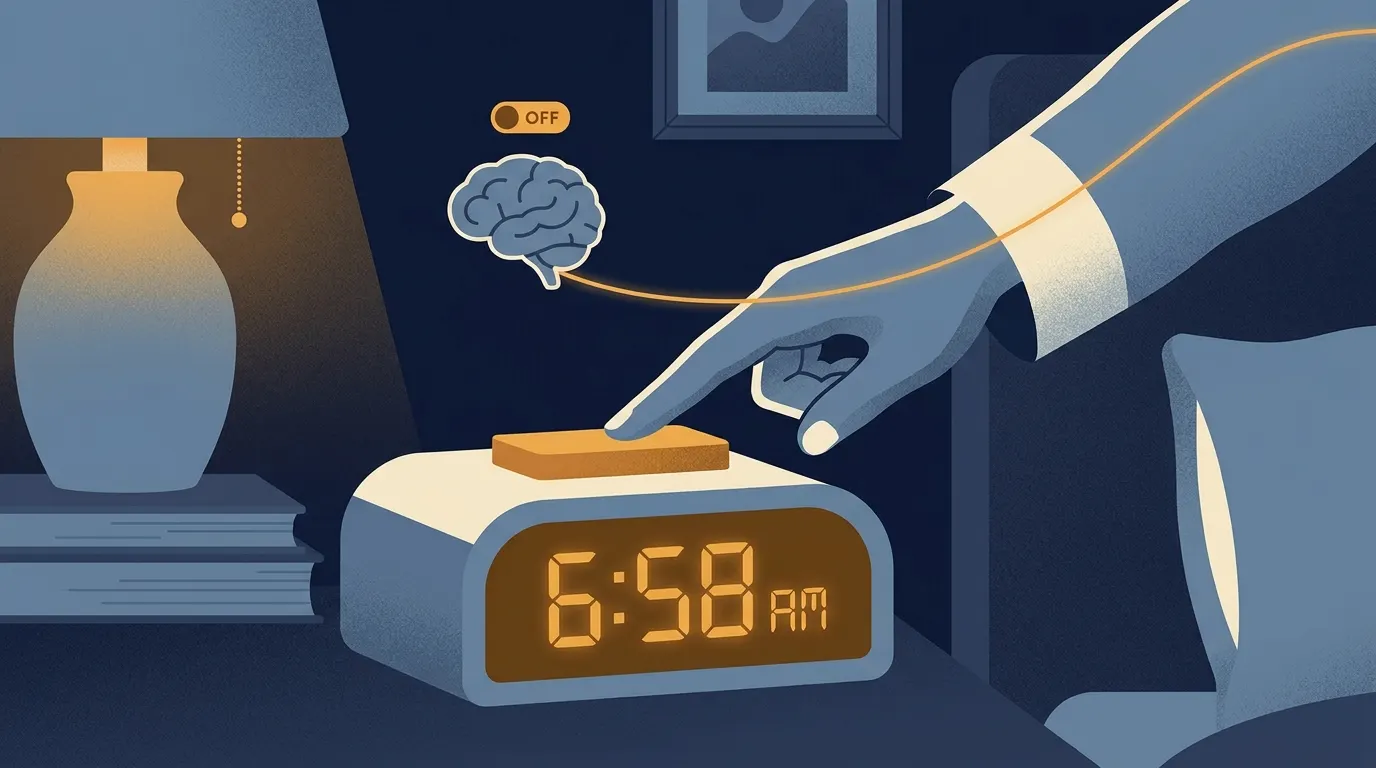
Eight hours in bed does not guarantee a rested morning. Four things can leave you exhausted after a full night: waking out of deep sleep, a night broken by brief arousals you never remember, sleep that lands at the wrong time for your body clock, and a debt left over from earlier short nights.
Key points
- Eight hours in bed is an average target, and time in bed is not the same as time asleep.
- Waking out of deep slow-wave sleep causes sleep inertia, a measured drop in alertness that usually fades within about 30 minutes.
- Brief arousals you never remember, including those caused by obstructive sleep apnoea, can break up a night that looks complete.
- Sleep debt from weeks of short nights builds up, and one full night does not repay it.
Picture 6:58 am. The alarm goes off on schedule after a full eight hours. Your limbs feel packed with wet sand, and it takes effort to remember what day it is. Your body is working as designed. The number on the clock was only ever an average target, and the case has four better suspects.
One correction comes first. Time in bed is not time asleep. Eight hours under the covers can be six and a half hours of sleep once you subtract the tossing, the phone checks and the drifting in and out that nobody remembers.
Why do I wake up groggy after a full night's sleep?
Because of the sleep stage the alarm pulled you out of. The foggy, thick-headed state right after waking is called sleep inertia, and researchers measure it as a temporary drop in alertness and performance. It usually fades within about 30 minutes, though it can last longer (Tassi and Muzet, 2000).
Sleep runs in cycles of roughly 90 minutes, moving through light sleep, deep slow-wave sleep and REM. Wake near the end of a cycle and you surface cleanly. Wake from deep slow-wave sleep and inertia hits much harder.
That is how an eight-hour night ending mid-deep-sleep can feel worse than seven and a half hours ending on a cycle boundary. The body is the same and the total is similar, but the morning is not. One review of the science carries the title "Waking up is the hardest thing I do all day" (Trotti, 2017). The same mechanism explains why a nap can leave you feeling worse.
Can your sleep be broken without you knowing?
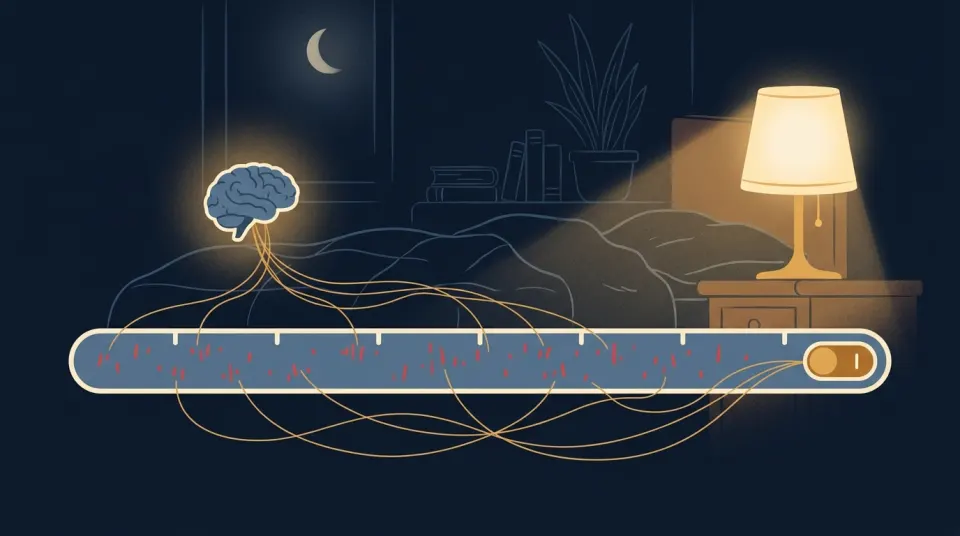
Yes. A night can contain dozens of micro-arousals, brief jolts toward wakefulness too short to remember. Each one takes a slice of deep or REM sleep, and the result is a night that looks whole and restores very little.
The biggest hidden culprit is obstructive sleep apnoea. The airway briefly collapses, breathing pauses, and the brain rouses just enough to reopen it, sometimes hundreds of times a night. It is common and badly underdiagnosed (Punjabi, 2008). The usual signs are loud snoring, gasping, and waking exhausted after what looks like a full night on paper.
Apnoea is one fragmenter among several. Alcohol helps you fall asleep fast, then breaks the second half of the night into pieces. Late caffeine, a warm room, street noise and a restless partner all add arousals to a night that felt normal. Brief wakings between cycles are also part of why you wake up at 3am.
Does it matter what time you sleep?
It does. Your circadian clock tracks how much you sleep, and it also decides when that sleep restores you. A full stretch at the wrong internal hour can feel shallow.
Researchers call the mismatch social jet lag (Roenneberg et al., 2012). A night owl made to wake at six has it. So does anyone whose weekend lie-in drags the internal clock later than the working week allows.
Take two people with the same eight hours. One sleeps inside their natural window. The other is a night owl on an early schedule, and wakes feeling jet-lagged because the body clock never agreed to that hour. The bedside clock says eight hours. The internal clock says those hours landed in the wrong place, and the internal clock decides how rested you feel.
The clock on your nightstand says eight hours, but the clock inside your brain decides how rested you feel.
Can one good night clear a sleep debt?
No, because short nights add up. Van Dongen and colleagues (2003) held people to six hours a night and found their performance kept declining day after day.
The unsettling detail is that those people often felt they had adapted while their test results kept getting worse. A debt you cannot feel is still a debt. One eight-hour night after weeks of six-hour nights leaves you in the red, and a single weekend of catching up does not undo it.
The target also varies by person. The National Sleep Foundation puts the healthy adult range at seven to nine hours (Hirshkowitz et al., 2015). If your body needs closer to nine, a "full" eight was a mild deficit before the night began.
The verdict
You woke exhausted because you surfaced from the wrong stage, or the night was fragmented, or it fell at the wrong hour for your body clock, or you were already in debt. Often two or three of these act together. The target was always eight hours of continuous, well-timed, stage-complete sleep, and duration is one dial among four. That also explains why extra time in bed rarely fixes it: if the night is broken or badly timed, another hour mostly buys more of the same sleep.
What actually helps
These are the practical points from the research behind this case. They describe sleep habits and are not treatment.
- Fix your wake time first. Getting up at the same hour every day, weekends included, steadies the body clock so you tend to wake from lighter sleep.
- Wake gently and find light. A gradual, light-based alarm is kinder than a buzzer. Bright light straight after waking is the fastest way to clear sleep inertia, and a short walk helps too.
- Give coffee time. Caffeine works, but it takes 20 to 30 minutes to take effect.
- Protect continuity. Keep the room cool, dark and quiet. Avoid alcohol within three to four hours of bed, and keep caffeine to early afternoon at the latest.
- Work with your chronotype where life allows. Keep weekend sleep times close to weekday ones. A two-hour weekend drift can recreate a small dose of jet lag by Monday.
- Repay debt slowly. A string of consistent full nights beats one marathon lie-in.
- Count sleep, not time in bed. A sleep diary, or simply noticing how fast you fall asleep and how often you wake, tells you more than the alarm clock.
When to see a GP
Loud snoring, gasping or pauses in breathing at night, waking unrefreshed and daytime sleepiness together form the classic pattern of obstructive sleep apnoea. That pattern is worth raising with your GP, who can arrange screening or refer you to a sleep specialist. Untreated apnoea carries cardiovascular risk, which makes it the most important thing to rule out when sleep never refreshes you.
Persistent unrefreshing sleep can also come from thyroid problems, depression, anaemia or medication. Each of those is a conversation for a GP. This article is educational and is not medical advice.
Quick answers
Why do I feel worse after 8 hours of sleep than after 7.5?
Sleep runs in cycles of roughly 90 minutes. An eight-hour night that ends in the middle of deep slow-wave sleep produces heavy sleep inertia. A slightly shorter night that ends at the close of a cycle lets you wake from lighter sleep, so the morning feels clearer.
How long does sleep inertia last?
Sleep inertia is the foggy state right after waking, and researchers measure it as a temporary drop in alertness and performance. It usually fades within about 30 minutes, though it can last longer, and it is strongest when you wake out of deep slow-wave sleep (Tassi and Muzet, 2000).
Can one long night of sleep fix a sleep debt?
No. In the Van Dongen study, people held to six hours a night kept getting worse on performance tests day after day, even though they felt they had adapted. A debt built over weeks clears slowly, so a run of consistent full nights works better than one long lie-in.
Sources
- Tassi, P. & Muzet, A. (2000). Sleep inertia. Sleep Medicine Reviews, 4(4), 341-353. View source ↗
- Trotti, L.M. (2017). Waking up is the hardest thing I do all day: sleep inertia and sleep drunkenness. Sleep Medicine Reviews, 35, 76-84. View source ↗
- Punjabi, N.M. (2008). The epidemiology of adult obstructive sleep apnea. Proceedings of the American Thoracic Society, 5(2), 136-143. View source ↗
- Roenneberg, T., Allebrandt, K.V., Merrow, M. & Vetter, C. (2012). Social jetlag and obesity. Current Biology, 22(10), 939-943. View source ↗
- Van Dongen, H.P.A., Maislin, G., Mullington, J.M. & Dinges, D.F. (2003). The cumulative cost of additional wakefulness: dose-response effects on neurobehavioral functions and sleep physiology from chronic sleep restriction and total sleep deprivation. Sleep, 26(2), 117-126. View source ↗
- Hirshkowitz, M. et al. (2015). National Sleep Foundation's sleep time duration recommendations: methodology and results summary. Sleep Health, 1(1), 40-43. View source ↗
NightWise is educational content based on published sleep research. It is not medical advice. If something about your sleep worries you, speak to your GP or a sleep specialist.
Comments
Loading comments…