Why Do Naps Make You Feel Worse? The 30-Minute Trap
A 20-minute nap and a 90-minute nap both tend to end in light sleep. The lengths in between wake you from the deepest stage.
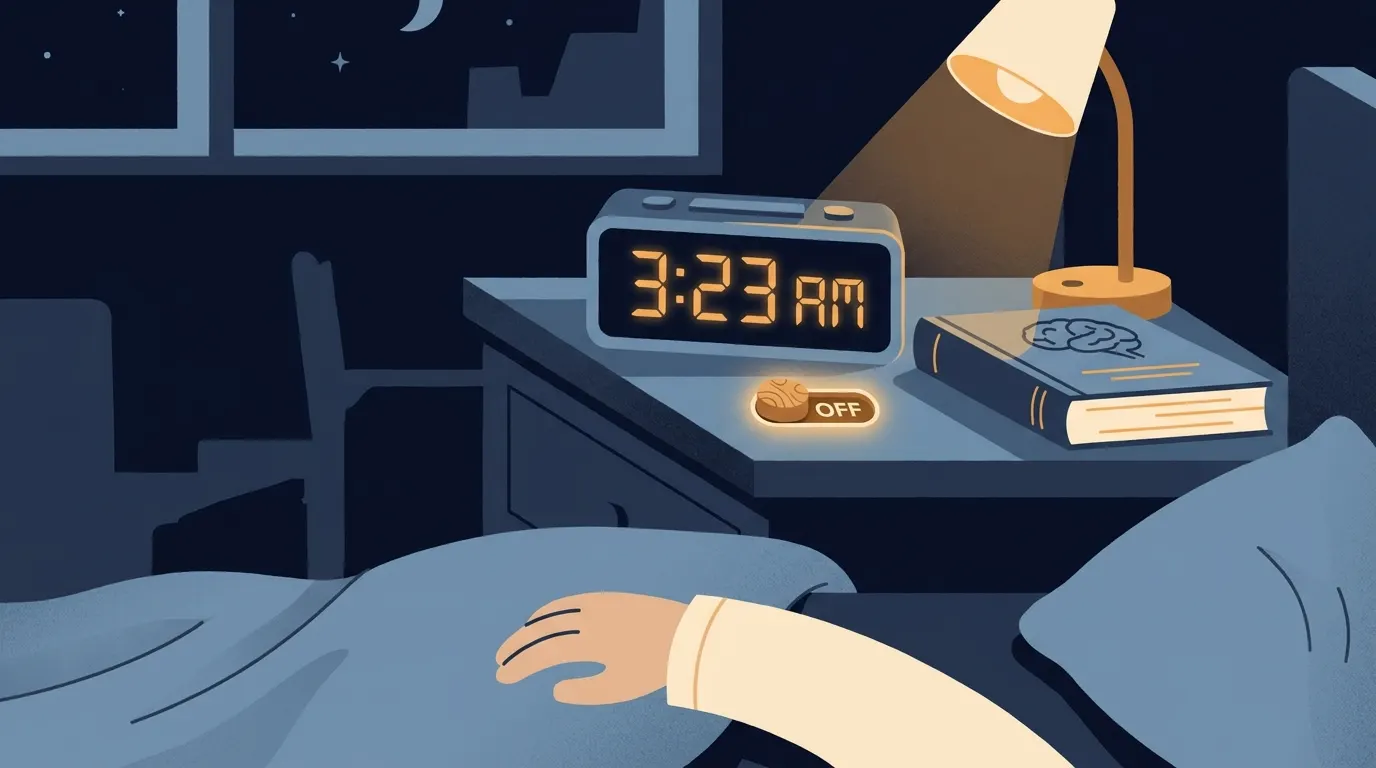
A nap makes you feel worse when the alarm pulls you out of deep slow-wave sleep. The fog that follows is called sleep inertia, and it is strongest after naps of roughly 30 to 60 minutes. Naps of about 20 minutes, or a full 90-minute cycle, usually end in lighter sleep and a clearer head.
Key points
- The fog after a nap is sleep inertia, a measurable dip in alertness and performance that is worst when you wake from deep slow-wave sleep.
- Naps of 10 to 20 minutes stay in light sleep, and a full cycle of about 90 minutes returns to light sleep or REM.
- Naps of 30 to 60 minutes often end in deep N3 sleep, which is why they can feel worse than no nap.
- A long nap late in the afternoon uses up the sleep pressure you need at bedtime.
You lie down for a quick rest and wake feeling as if your brain has been set in wet concrete. Some days the same nap works like magic. The nap is identical and the results are opposite, which makes this a case about timing. There are three suspects: the stage you woke from, the length of the nap, and what the nap took from the night ahead.
Why do you feel groggy after a nap?
Because you woke from the wrong stage of sleep. Sleep inertia is a measurable dip in alertness and performance in the minutes after waking, and it is worst when you wake from deep slow-wave sleep (Tassi and Muzet, 2000; Hilditch and McHill, 2019).
Sleep works like a staircase. You go down and come back up about every 90 minutes. The first steps are N1 and N2, the light stages. Your heart rate slows and your muscles relax, but your brain stays close to the surface, so waking from here is usually quick and leaves you refreshed.
Stay asleep longer and you reach N3, slow-wave sleep, named after the long rolling waves that take over the brain. This is the deepest and most restorative stage, when the body does its physical repair and files much of the day's learning into long-term memory. It is the stage your brain least wants to leave early.
Leaving N3 in a hurry is like pulling a deep-sea diver to the surface without letting them decompress. For a short while the thinking and planning parts of your brain are still offline while the rest of you is trying to stand up. The same thing happens on mornings when eight hours still leaves you exhausted.
The nap did not fail you. The alarm went off while your brain was in its deepest stage of sleep.
How long should a nap be?
About 20 minutes, or about 90. Nap length decides which stage you are in when the alarm sounds.
- 10 to 20 minutes. You stay in light N1 and N2 sleep. You clear some mental fatigue and wake with little inertia. This is the power nap.
- 30 to 60 minutes. You are often deep in N3 when the alarm goes. Inertia is at its strongest, and your thinking is slower and clumsier than before you lay down.
- About 90 minutes. You complete a full cycle and climb back to light sleep or REM, so the exit is much smoother.
The middle band is the dead zone. A mid-length nap can feel worse than no nap because it interrupts deep sleep partway through. The 90-minute rhythm is the same one behind waking at 3am between sleep cycles.
What is the best time of day to nap?
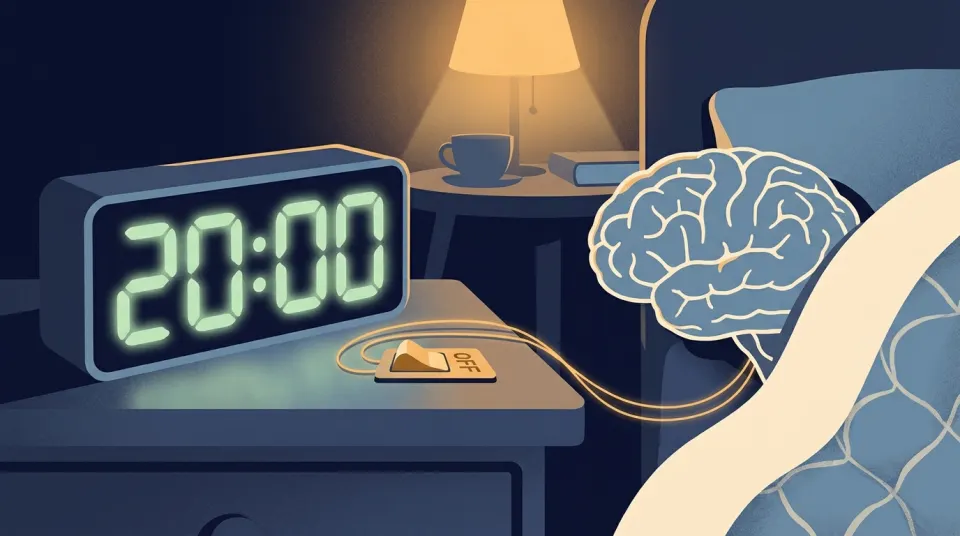
Early afternoon. Around one to three in the afternoon your alertness dips and your core body temperature drops slightly. The body clock sets this dip, and lunch has little to do with it. The dip is the reason the early afternoon became siesta hour in so many cultures.
Nap in that window and you are working with your biology. Wait until five or six in the evening and you are napping at a time when your body is trying to raise its alertness for the last stretch of the day.
Can a nap ruin your sleep that night?
Yes, if it is long and late. Think of sleep pressure as a balloon filling with a chemical called adenosine. The longer you are awake, the fuller the balloon and the sleepier you feel. That pressure is the strongest force pulling you into sleep each night.
Sleep lets the air out. A long nap in the late afternoon lets out too much, and by ten o'clock there is little pressure left to carry you off at your usual bedtime.
The cycle then feeds itself. You nap for two hours at 4 pm, you cannot sleep at midnight, you wake exhausted the next day, and you need another long nap to function.
Does a coffee nap work?
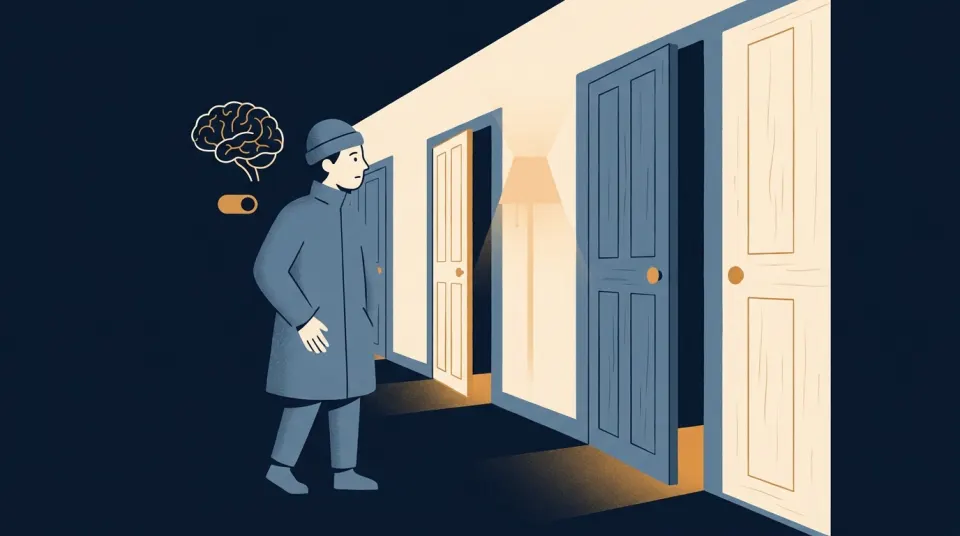
There is research behind it. A coffee nap means drinking coffee, about 200 milligrams of caffeine, then lying down at once for a short nap. Reyner and Horne (1997) studied caffeine combined with a short nap as a way to suppress sleepiness in drivers.
The timing is the point. Caffeine takes about 20 minutes to reach your brain. While you nap, your brain clears a little adenosine. When the alarm goes, the caffeine is arriving just as you surface from light sleep.
The catch is the hour. Caffeine has a half-life of roughly five or six hours, so a cup at 4 pm is still half active at 10 pm.
The verdict
The nap hangover is a timing problem. Your brain is so good at deep sleep that it resists being pulled out of it, and sleep inertia is the cost of an alarm that lands in N3. The state is temporary and fades as the brain finishes its handover from sleep to waking (Hilditch and McHill, 2019). Twenty minutes gives you a refresh, 90 minutes gives you a full cycle, and the lengths in between are where the trouble sits.
What actually helps
- Decide the length before you lie down. Choose 20 minutes or 90 minutes and set the alarm. You cannot judge the dead zone from inside a nap.
- Allow time to fall asleep. An alarm at 25 minutes gives you five minutes to drift off and 20 to rest.
- Set a second alarm at 95 minutes. If you sleep past the half-hour mark, staying down for the full cycle is often the better exit.
- Nap in the early afternoon. Leave the evening alone so your sleep pressure is intact at bedtime.
- Find bright light if you wake groggy. Daylight is the strongest signal your body clock has, and it tells your brain the day is still going.
- Move for five minutes. Light stretching or a brisk walk raises your heart rate and body temperature.
- Keep important tasks out of the first minutes after waking. Sleep inertia lifts on its own, so give it time.
When to see a GP
If you need long naps every day to get through, even after full nights, or if sleep never feels refreshing however long it lasts, a timing fix may not be the answer. Persistent daytime sleepiness can be a sign of a sleep disorder such as sleep apnoea, where breathing pauses repeatedly through the night. Speak to your GP, who can refer you to a sleep specialist. This article is educational and is not medical advice.
Quick answers
How long should a nap be to avoid grogginess?
Keep it to about 20 minutes, or commit to a full cycle of roughly 90 minutes. A short nap stays in light N1 and N2 sleep. A 90-minute nap has usually climbed back to light sleep or REM. Naps of 30 to 60 minutes often end in deep N3 sleep.
Why do I feel worse after a 30 to 45 minute nap?
By that point your brain has usually slid into N3, the deep slow-wave stage. Waking from N3 produces the strongest sleep inertia, so you feel heavy and think more slowly than before you lay down. The effect is temporary and fades as the brain finishes waking.
What is a coffee nap?
A coffee nap means drinking coffee, then lying down at once for a short nap. Caffeine takes about 20 minutes to arrive, so it starts working as you wake. Reyner and Horne (1997) tested caffeine combined with a short nap as a way to suppress sleepiness in drivers.
Sources
- Tassi, P. & Muzet, A. (2000). Sleep inertia. Sleep Medicine Reviews, 4(4), 341-353. View source ↗
- Hilditch, C.J. & McHill, A.W. (2019). Sleep inertia: current insights. Nature and Science of Sleep, 11, 155-165. View source ↗
- Reyner, L.A. & Horne, J.A. (1997). Suppression of sleepiness in drivers: combination of caffeine with a short nap. Psychophysiology, 34(6), 721-725. View source ↗
NightWise is educational content based on published sleep research. It is not medical advice. If something about your sleep worries you, speak to your GP or a sleep specialist.
Comments
Loading comments…