Why Do Older People Wake Up So Early? The Clock Runs Fast
The body clock moves earlier with age, deep sleep thins and the clock's signal weakens. The need for sleep barely changes.
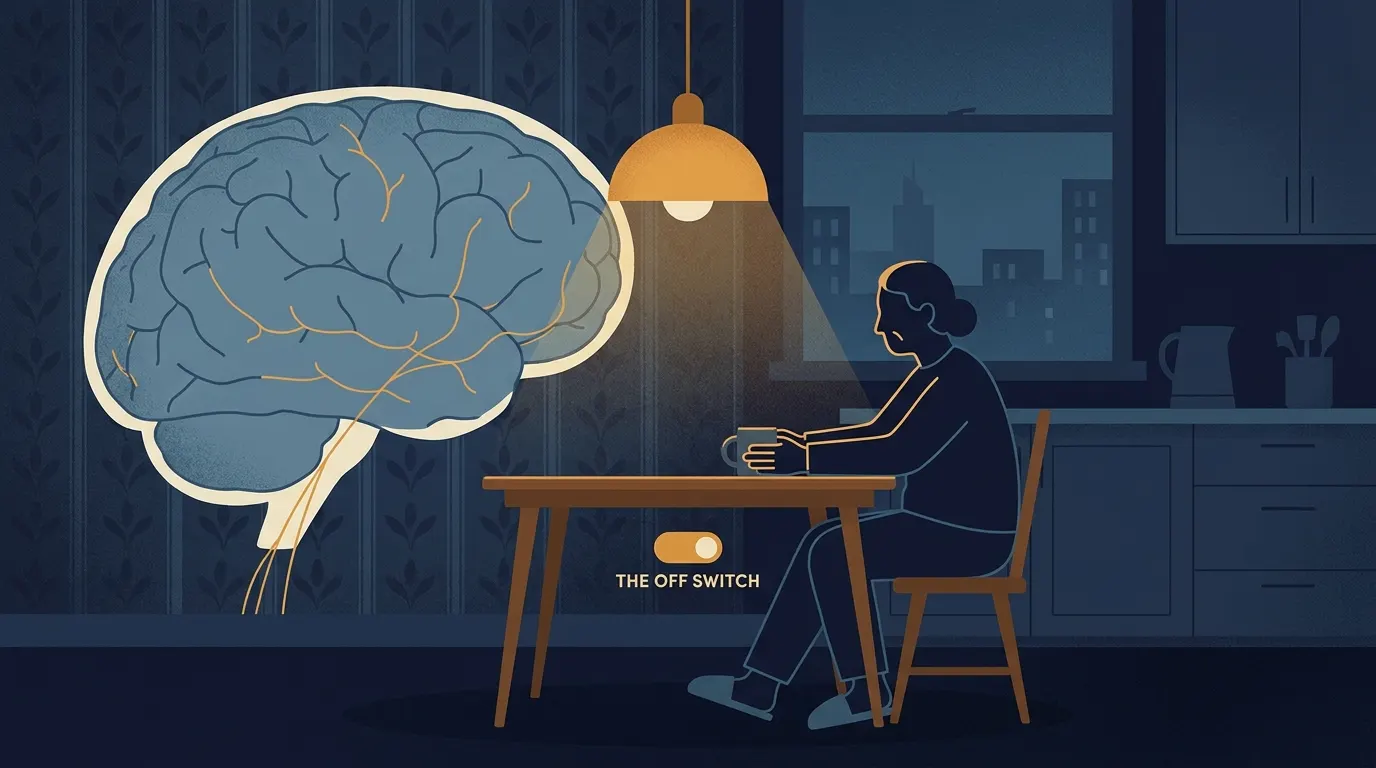
Older people wake up early because the body clock shifts earlier with age, so the internal "time to rise" signal fires in the small hours. Deep sleep also thins out, which makes the night lighter and quicker to break. The need for sleep stays about the same. The ability to hold on to it declines.
Key points
- Older adults need roughly as much sleep as other adults, but find it harder to get it in one unbroken block.
- With age the body clock advances, so melatonin, body temperature, sleepiness and waking all arrive earlier.
- Deep slow-wave sleep declines steeply with age, which leaves the night lighter and quicker to break.
- Evening light, a steady schedule and bright, active days work with the clock, while extra time in bed does not.
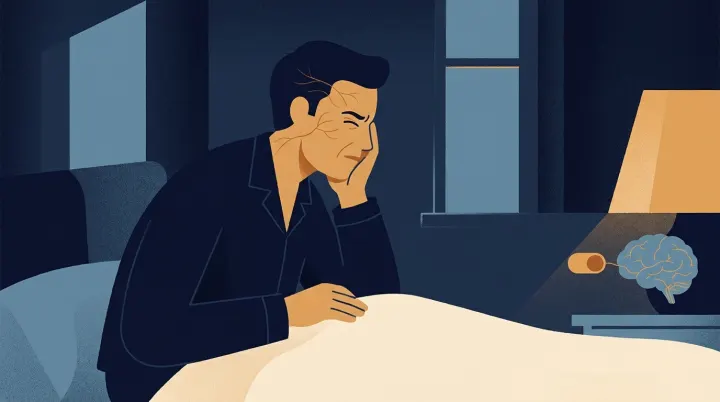
Picture the scene. It is ten to five in the morning and one light is already on in a quiet house. An older man sits at the kitchen table with a cup of tea, fully awake, and he never set an alarm. Families explain this with a comfortable phrase: older people need less sleep. The case file says otherwise.
Do older people need less sleep?
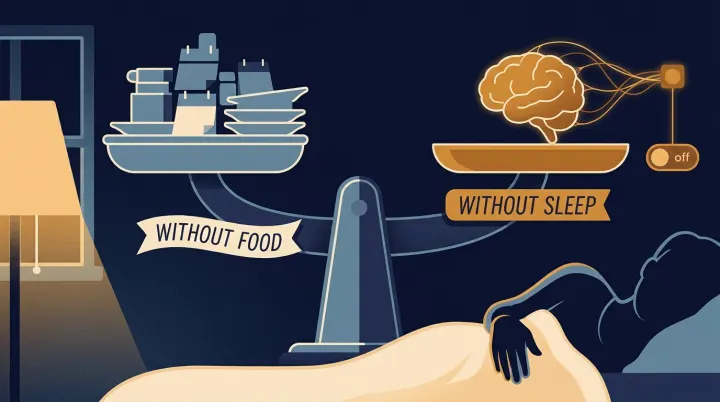
No. When researchers study the sleep of healthy older people, the total they need settles at a familiar figure, close to that of any other adult. The difference is that they find it harder to gather that sleep into one solid, unbroken block.
So the need is intact and the grip has loosened. That distinction matters, because the myth does harm. Tell an older person they simply need less sleep and they may accept broken, unrefreshing nights that could often be improved.
Three suspects explain what really changes. The first sets the timing of the night, the second sets its depth, and the third weakens the system that keeps both steady.
Why does the body clock shift earlier with age?
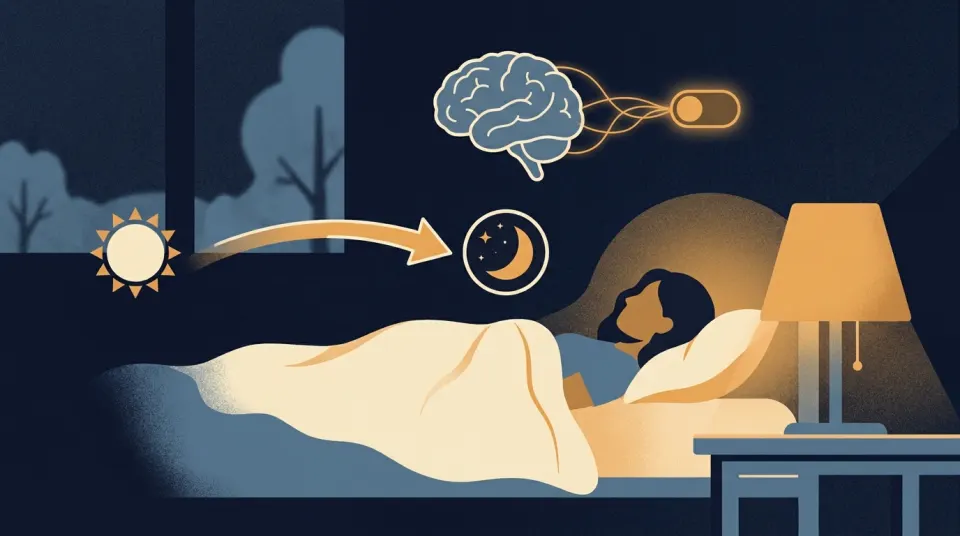
With age, the internal clock advances. The nightly rise of melatonin, the hormone that tells the body it is night, comes forward. The daily dip and climb of core body temperature comes forward too. Researchers including Charles Czeisler and Jeanne Duffy mapped this earlier-running clock in older adults decades ago (Czeisler et al., 1992; Duffy et al., 1998).
It is the reverse of the teenage pattern. Puberty pushes the clock two or three hours late. Age pulls it early.
The result is that sleepiness arrives early in the evening, and the wake-up signal fires early as well. At five in the morning the older body is not being restless or stubborn. It is receiving the same message a younger body would not hear until seven or eight.
Nobody chooses this. The clock moves the start of the day forward year by year, so gradually that the drift goes unnoticed until dawn is something you meet instead of sleeping through.
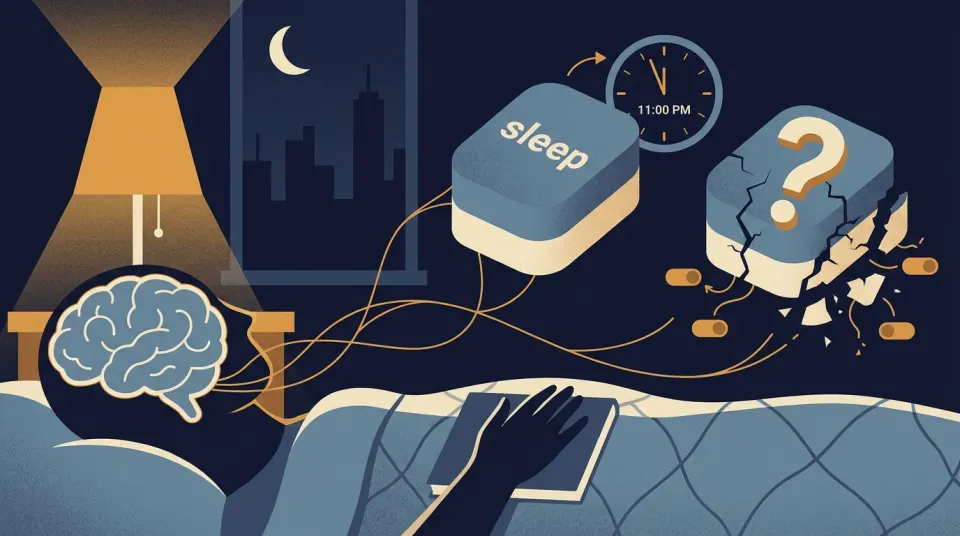
Why is sleep lighter and more broken in later life?
An early clock on its own would only mean early nights and early mornings: a shifted block of good sleep. It would not explain why older sleep breaks so often. That takes the second suspect, the loss of deep sleep.
Deep, slow-wave sleep (stage N3) is the heaviest stage and the hardest to wake from. It declines steeply with age. A large analysis of sleep across the human lifespan charted the fall: the older we get, the less deep sleep we get (Ohayon et al., 2004).
Deep sleep is the anchor that holds a night together. In it, a slammed door or a passing car cannot reach you. As it thins, you spend more of the night in light, shallow sleep, floating just under the surface.
A younger body in deep sleep is almost soundproofed against the world, and an older body has lost much of that insulation.
That is why the same full bladder, the same creak of the house or the same early light now lifts the sleeper clean out of sleep. A young brain in deep sleep would never register them. The night fills with small awakenings. We look at night waking more closely in why you wake up at 3am.
What weakens the body clock as we age?
The third suspect is quieter. The body clock stays accurate by taking in daylight, especially bright morning light, which resets it each day. With age, two things fade: the clock's own grip on the body's rhythms weakens, and the ageing eye lets in less light to set the clock by.
A clock that receives a weaker signal keeps looser time. The contrast between day and night softens and the rhythm flattens. A flat rhythm is a fragile one. It drifts more, and it loses the confident dip into night-time sleep that a strong clock enforces.
Put the three suspects together and the pattern is complete. An earlier clock brings the night forward. Thinner deep sleep makes it shallow. A dimmer clock signal lets the whole rhythm fray at the edges.
Is waking at 5am a gift of extra hours?
Often it is the opposite. The appetite for sleep has not declined. What has declined is the ability to finish the meal in one sitting.
So that 5am waking can be sleep the body still wanted and could no longer hold. The early riser is not blessed with a smaller need. They are unable to keep sleeping through a need that has not gone away, which is one reason eight hours in bed can still leave you tired.
The verdict
Nothing has broken and nothing has shrunk. The clock has walked forward with the years, deep sleep has thinned, and the body's hold on the night has loosened. The older night is earlier, lighter and more broken all at once, while the need for sleep stays roughly where it always was. The man at the kitchen table still needs his sleep. His clock has moved it.
What actually helps
The instinct when you wake too early is to go to bed even earlier and lie in to catch up. Both drag the clock further in the wrong direction. The points below are what the research on timing suggests, offered as explanation and not as treatment.
- Evening light. Bright light late in the day pushes an early clock later. A well-lit sitting room, a walk before dusk or time in the late-afternoon sun all count, and less light in the very early morning helps too.
- A steady schedule. Consistent bed and wake times give a loosening clock something firm to hold.
- Bright, active days. Daytime activity and plenty of daylight sharpen the contrast between day and night, and help deepen the slow-wave sleep that remains.
- Less time spent willing it. Light and rhythm move the clock. Effort does not, so extra hours in bed usually add frustrated, wakeful time to a fragile night. The same trap applies when you try to force yourself to sleep.
It is the teenager's advice turned upside down. A teenager uses morning light to pull a late clock earlier. An early-rising older adult uses evening light to push an early clock later.
When to see a GP
A gradually earlier, lighter night is a normal part of ageing. Early waking is not always the clock, though. When very early waking arrives with low mood, a loss of interest or a heaviness that colours the whole day, that pairing can be a sign of depression.
Speak to your GP if early waking comes with that flatness of mood, if your sleep changes suddenly and sharply, or if daytime sleepiness takes over. The clock explains a great deal, and it does not explain everything. A GP can refer you to a sleep specialist if needed.
This article is educational and is not medical advice.
Quick answers
Do older people need less sleep?
No. In healthy older people the amount of sleep needed stays close to that of any other adult. What declines is the ability to gather that sleep into one solid block, because the body clock runs earlier and deep sleep thins out with age.
Why do older people get sleepy so early in the evening?
The body clock advances with age. The nightly rise of melatonin and the daily rhythm of core body temperature both come forward, so sleepiness arrives earlier in the evening and the internal wake-up signal fires earlier in the morning.
Does going to bed earlier help if you wake too early?
Usually not. Going to bed even earlier and lying in both drag the clock further in the wrong direction. The clock responds to light and rhythm, so bright light in the evening and a consistent schedule are the levers that move the morning wake-up later.
Sources
- Ohayon, M.M., Carskadon, M.A., Guilleminault, C. & Vitiello, M.V. (2004). Meta-analysis of quantitative sleep parameters from childhood to old age in healthy individuals: developing normative sleep values across the human lifespan. Sleep, 27(7), 1255-1273. View source ↗
- Duffy, J.F., Dijk, D.J., Klerman, E.B. & Czeisler, C.A. (1998). Later endogenous circadian temperature nadir relative to an earlier wake time in older people. American Journal of Physiology, 275(5), R1478-R1487. View source ↗
- Czeisler, C.A., Dumont, M., Duffy, J.F. et al. (1992). Association of sleep-wake habits in older people with changes in output of circadian pacemaker. The Lancet, 340(8825), 933-936. View source ↗
NightWise is educational content based on published sleep research. It is not medical advice. If something about your sleep worries you, speak to your GP or a sleep specialist.
Comments
Loading comments…