Why You Can't Force Yourself to Fall Asleep
Effort solves almost every other problem you have. The case of the one thing that trying makes worse.
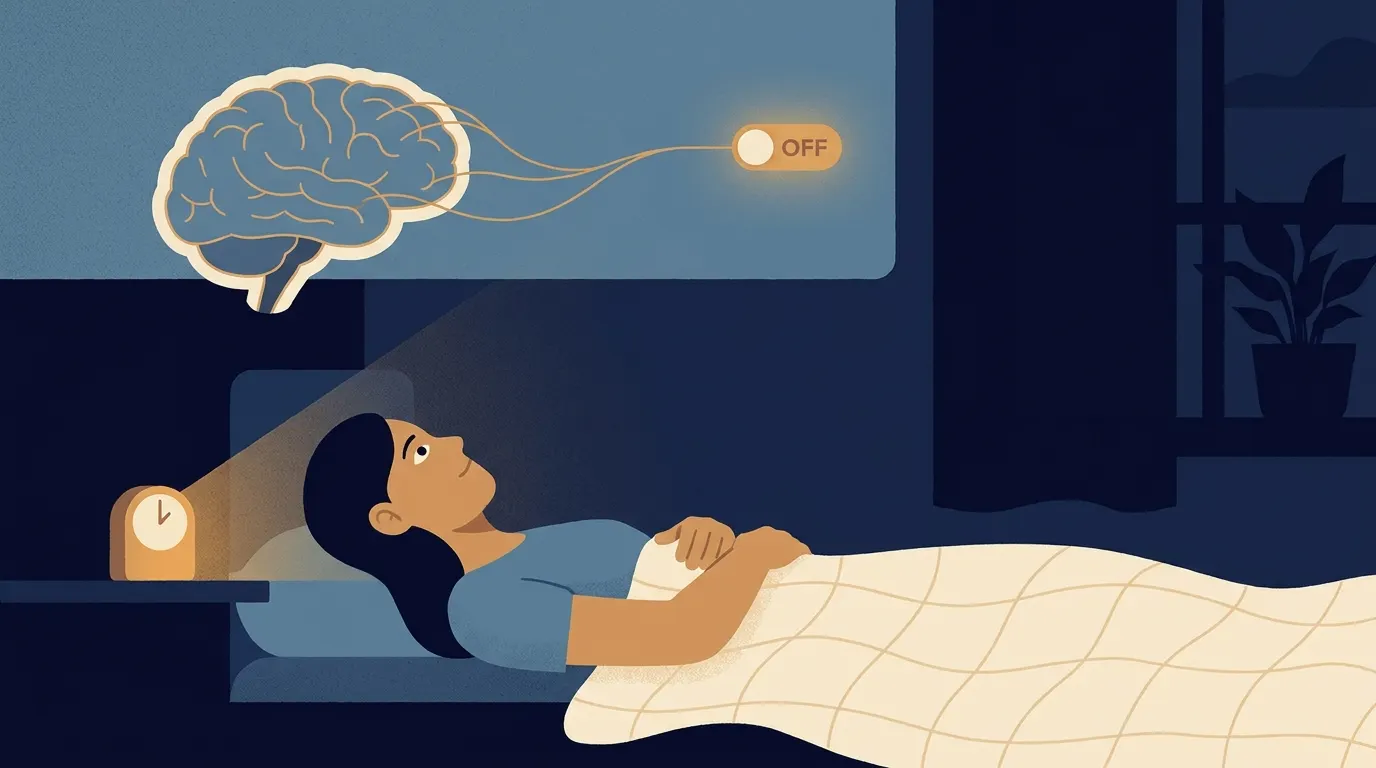
You cannot force yourself to fall asleep because sleep is an automatic process, and you cannot perform it on command. Your brain has to lower its arousal before sleep can start, and trying raises arousal. The harder you chase sleep, the more awake the chase makes you.
Key points
- Sleep is a relatively automatic process, and focused attention or direct attempts to control it can inhibit it (Espie et al., 2006).
- Trying is an alert, goal-directed state, so the effort to sleep switches on the arousal that sleep needs switched off.
- Watching for sleep and checking the clock keep the mind engaged and delay sleep further.
- Paradoxical intention, where you lie quietly and gently try to stay awake, is a recognised insomnia technique because it removes sleep effort.
It is twenty past two in the morning and you have done everything right. The room is dark, the phone is away and your body is heavy with tiredness. You close your eyes and wait. Sleep does not come, and the more you reach for it, the further back it steps.
Why can't you make yourself fall asleep?
You cannot make yourself fall asleep because sleep does not answer to your will. You can force your body to run when it is tired, to stay still when it itches, or to hold its breath. Sleep is the exception.
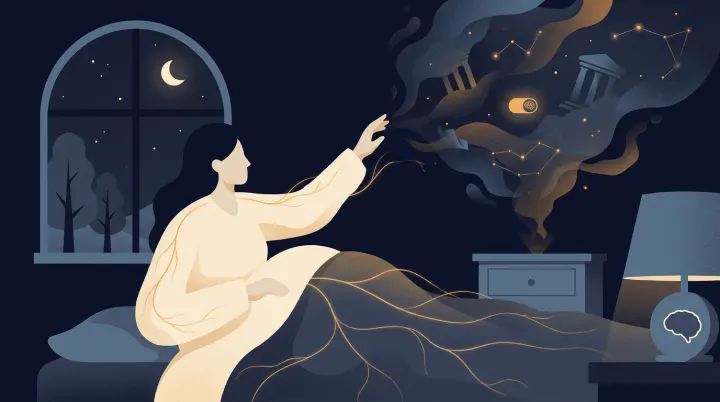
Most of us treat sleep as something you do, like switching off a light. We even say "I am going to sleep now", as if it were a decision. You can lift your arm this second because your arm obeys you. Sleep has no muscle to flex and no lever to pull.
The sleep scientist Colin Espie describes normal sleep as a relatively automatic process (Espie et al., 2006). It happens on its own when the conditions are right, with no effort from you. The deciding part of your brain steps back and the automatic part takes over, much as your breathing carries on while you read this page.
When sleep works, you never notice any of this. You lie down, you drift, and you are gone.
Espie's review adds a warning about automatic processes. They are vulnerable. Focused attention and direct attempts to control them can inhibit them. Nothing invites that attention like a night when you badly need to sleep.
Why does trying to sleep keep you awake?
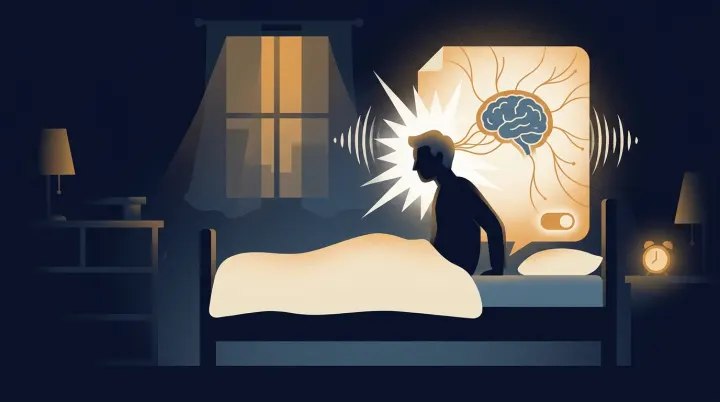
Trying to sleep keeps you awake because effort is a form of arousal. To fall asleep, your brain has to power down, quiet its alarm systems and lower its guard. Trying is focus, strain and a goal, and all of that switches the alert system back on.
A loop forms from there:
- You want to sleep, so you try.
- The trying raises your arousal.
- Higher arousal pushes sleep further away.
- The failure makes you want sleep more, so you try harder.
Every ounce of effort you spend on sleep goes into staying awake.
Espie's group built a way to measure this. The Glasgow Sleep Effort Scale records how hard a person is trying to sleep (Broomfield & Espie, 2005). Higher sleep effort tracks worse sleep.
The fight itself is the wakefulness.
Sleep is in familiar company here. You cannot tickle yourself, and you cannot will a blush away. Those things belong to the automatic brain, and so does sleep.
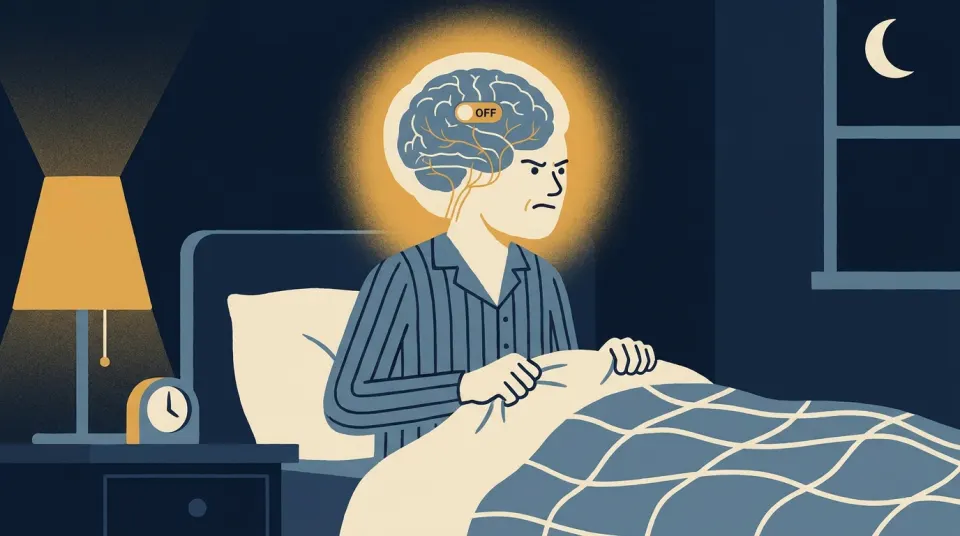
Does watching the clock make it harder to sleep?
Yes. Monitoring for sleep keeps your mind engaged, and a mind that is busy watching for sleep does not drift into it.
The third suspect in this case is attention. The moment you start checking (am I asleep yet, how long has it been, how will I cope tomorrow) you have switched the thinking mind back on.
The clock makes it worse. You look: ten past two. You do the arithmetic and work out that sleep now would still give you five hours. You look again at half past, and the number has dropped to four and a half. Each glance gives you a fresh reason to stay switched on.
Researchers have seen this in the lab. In a Posner-style attention task, people with insomnia were slower to pull their attention away from a clock than people who slept well. The finding fits the attention part of Espie's model: the more you watch for sleep, the longer it takes.
If you are awake in the small hours for a different reason, see why you wake up at 3am.
What happens if you try to stay awake instead?
If effort is the problem, the counter-move is to drop the effort. Sleep clinics use a technique built on this idea, and it sounds like a joke.
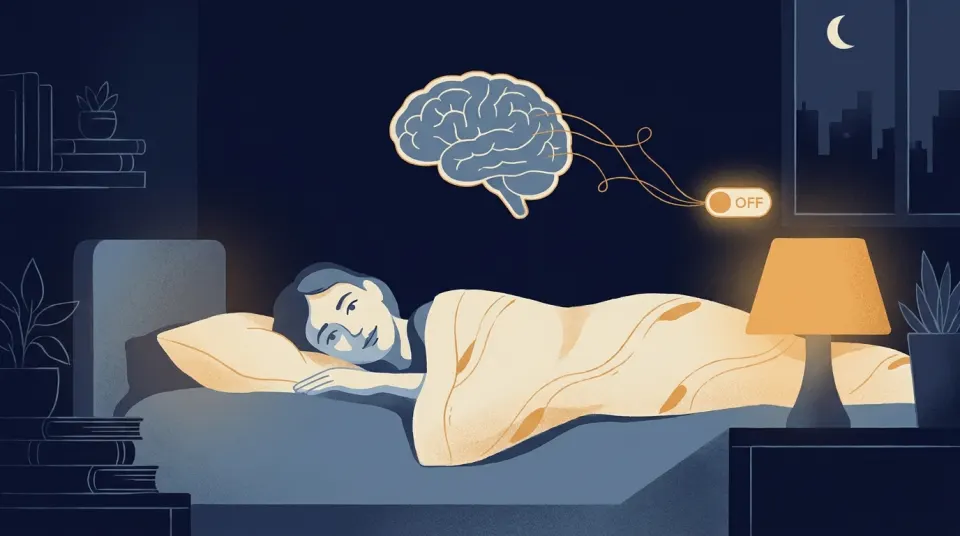
It is called paradoxical intention. You lie in the dark, comfortable and still, and you gently try to stay awake. You do not struggle. You keep your eyes softly open for as long as you comfortably can.
The technique works on the cause. Once you give up the goal of sleeping, the performance pressure goes, and sleep is free to arrive on its own. It is a recognised insomnia technique because it defuses sleep effort (Broomfield & Espie, 2003).
The door to sleep has no handle on your side. You cannot push it open. You can stop leaning on it and let it swing open by itself.
Is it a lack of willpower?
No, and this is the red herring of the case. "Try harder" gets the mechanism backwards. More trying means more arousal, and more arousal means less sleep. Willpower wins you almost everything else in life, and here it works against you.
Fear can do the same job as effort. People who dread an episode of exploding head syndrome can end up too tense to drift off.
The verdict
You cannot force yourself to fall asleep because sleep was never an action you perform. It is an action you release. It belongs to the automatic part of your brain, which can only take over once the trying, watching part lets go of the controls. If you are lying awake at twenty past two, you are not failing at sleep. You are attempting something that trying cannot do.
What actually helps
These are gentle takeaways from the research. None of them is a cure.
- Stop straining in bed. If you are wide awake and frustrated after a while, get up, keep the lights low and do something dull. Go back to bed when you feel sleepy.
- Turn the clock to face the wall. Each check is a small jolt of alertness.
- Swap the thought. "I am going to rest here in the dark" asks less of you than "I must sleep now".
- Protect the wind-down and the dark. Then let your sleep pressure and body clock do the work.
When to see a GP
A restless night now and then is normal. It is not insomnia.
If trouble sleeping lasts for weeks and wears on your days, see a GP. The first-line treatment is cognitive behavioural therapy for insomnia (CBT-I), a talking therapy built on these ideas. It comes ahead of sleeping pills. A GP can also refer you to a sleep specialist. This article is educational and is not medical advice.
Quick answers
Why can't I make myself fall asleep?
Sleep is not a voluntary act like lifting an arm. Colin Espie's attention-intention-effort model describes normal sleep as relatively automatic: it happens on its own when conditions are right, and trying to control it directly can inhibit it. There is no muscle to flex.
Why does trying harder to sleep keep me awake?
To fall asleep, your brain has to lower its arousal. Trying is an alert, goal-directed state that raises arousal instead. Espie's group built the Glasgow Sleep Effort Scale to measure how hard people try to sleep, and higher sleep effort tracks worse sleep.
What is paradoxical intention?
Paradoxical intention is a recognised insomnia technique. You lie comfortably in the dark and gently try to stay awake, with no struggle to sleep. Giving up the goal of sleeping removes the performance pressure, which leaves sleep free to arrive on its own (Broomfield & Espie, 2003).
Sources
- Espie, C.A., Broomfield, N.M., MacMahon, K.M.A., Macphee, L.M. & Taylor, L.M. (2006). The attention-intention-effort pathway in the development of psychophysiologic insomnia: a theoretical review. Sleep Medicine Reviews, 10(4), 215-245. View source ↗
- Broomfield, N.M. & Espie, C.A. (2003). Initial insomnia and paradoxical intention: an experimental investigation of putative mechanisms using subjective and actigraphic measurement of sleep. Behavioural and Cognitive Psychotherapy, 31(3), 313-324. View source ↗
- Broomfield, N.M. & Espie, C.A. (2005). Towards a valid, reliable measure of sleep effort. Journal of Sleep Research, 14(4), 401-407. (The Glasgow Sleep Effort Scale.) View source ↗
NightWise is educational content based on published sleep research. It is not medical advice. If something about your sleep worries you, speak to your GP or a sleep specialist.
Comments
Loading comments…