Why You Forget Your Dreams the Moment You Wake Up
You dream for around two hours a night and keep almost none of it. The case of the missing recordings.

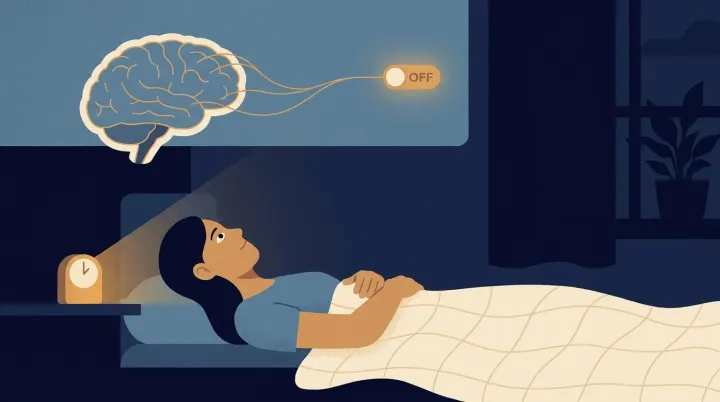
You forget your dreams because the brain's memory system is largely switched off while they play. During REM sleep, a chemical needed to fix memories in place is nearly absent, and the hippocampus is busy filing the day's real events. The dream runs in full, but nothing records it.
Key points
- During REM sleep, noradrenaline, a chemical central to forming lasting memories, is nearly absent (Hobson, 2009).
- The hippocampus spends the night replaying and consolidating the day's memories, so it does not record the dream.
- The dreams you remember are mostly the ones you wake directly out of, and that trace fades within minutes.
- People who say they never dream almost always dream like everyone else and do not remember it.
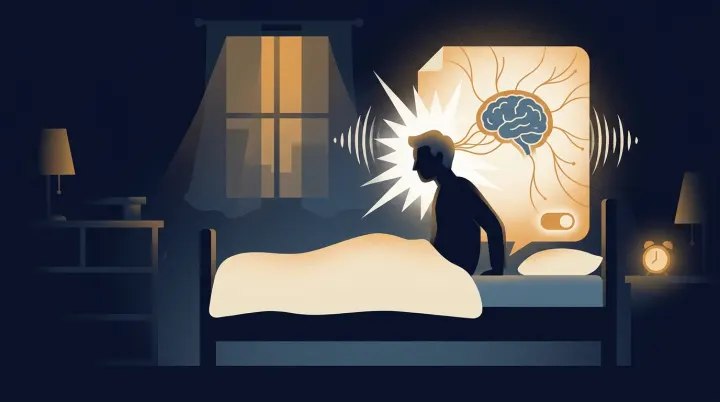
A moment ago it was the most vivid thing in the world. You open your eyes, reach for it, and within seconds almost nothing is left. Perhaps one image survives, or a place, or a face. More often you keep only a feeling. You spend around two hours of every night dreaming, and you lose most of it before breakfast.
Why do we forget our dreams?
We forget dreams because having an experience and keeping one are two different operations. You can live through something intensely and store none of it if the machinery of memory is off at the time. During dreams, it largely is.
This case has three suspects: a missing chemical, a recorder that is busy elsewhere, and the timing of your waking. The first two explain why dreams vanish. The third explains why a few survive.
Suspect one: the missing memory ink
Laying down a lasting memory depends on the right brain chemistry. One key player is a neuromodulator called noradrenaline, which helps stamp an experience in so that it sticks.
The dream researcher Allan Hobson describes what happens to it at night. During REM sleep, the stage where the most vivid dreams unfold, noradrenaline falls to almost nothing (Hobson, 2009).
So the dream plays out in detail while your brain is active, emotional and immersed. The chemical that would make it permanent is nearly absent. The experience is vivid to live and very hard to keep.
Suspect two: the recorder is busy
The second suspect is a small, seahorse-shaped structure called the hippocampus. Its job is to timestamp your experiences and file them into long-term memory.
During REM sleep the hippocampus is not idle, and it is not recording your dream. It is replaying the day you have lived, strengthening the memories that matter and moving them into long-term storage. Sleep researchers call this work memory consolidation (Diekelmann & Born, 2010).
The dream plays in a theatre where the memory ink has run dry and the recorder is pointed the other way.
Seen this way, the forgetting is a sensible trade. Your brain spends the night's limited recording capacity on what happened to you, and lets go of the stories it invented along the way.
Why do you remember some dreams and not others?
You mostly remember the dreams you wake directly out of. If you surface while a dream is still playing, you catch it in the brief window as your waking brain and its memory chemistry come back online.
Dreaming sleep clusters in the final hours before dawn and grows longer and richer toward morning. The dreams you are most likely to catch are the late ones. REM sleep is also the stage behind sleep paralysis.
Even a caught dream is fragile. It does not arrive saved. It sits in fleeting short-term memory and decays within minutes, sometimes within seconds, unless you deliberately attend to it. That is why a dream so often vanishes the instant you get up and your attention turns to the day.

Why does the feeling of a dream last longer than the story?
The emotional residue of a dream can outlast its content. The dread, the joy or the ache can colour your whole morning long after every image has gone.
You lose the story and keep the mood. It is a feeling with no memory attached, which is one reason a forgotten dream can still leave you unsettled or oddly cheerful.
Why do some people remember more dreams than others?
Recall varies from person to person, and the difference tracks how often you briefly wake during the night, along with patterns in your brain activity. Perrine Ruby's group has compared high and low dream recallers and found both (Ruby et al., 2013).
People who wake into their dreams more often catch more of them. People who sleep straight through keep almost none. Brief awakenings are a normal part of the night's sleep cycles.

Do people who say they never dream still dream?
Almost always, yes. Someone who says "I never dream" dreams for the same two hours a night as everyone else. What they mean, without knowing it, is "I never remember". The dreams happened and the records are missing.
The verdict
You forget your dreams because the part of you that could have kept them was doing another job. During REM sleep, noradrenaline is nearly absent and the hippocampus is consolidating your waking life. The few dreams you keep are the ones you wake out of, caught in the moments before they fade. Ordinary dream forgetting is healthy.
What actually helps
These points are for the curious who want to keep more of their dreams. None of them is a treatment.
- Keep a notebook within arm's reach of the bed. The trace fades within minutes, so the notebook has to be closer than your phone.
- Write or speak the dream the instant you wake. Do it before you move, before you check a phone, and before your attention scatters. Attending to the dream right then is what moves it into lasting memory.
- Work inside the first minute. If you get up and start the day first, the trace is almost always gone.
- Wake naturally when you can. The richest dreams come late, in the final REM-heavy stretch of the morning. Waking gently from that stretch gives you more to remember than an alarm that pulls you out of deep sleep.
When to see a GP
Forgetting your dreams is normal and needs no attention.
A sudden, marked change in your dreaming or your recall is worth mentioning to a GP. So are vivid, distressing nightmares that disturb your waking life. A GP can refer you to a sleep specialist if needed. This article is educational and is not medical advice.
Quick answers
Why do I forget my dreams so quickly?
During REM sleep, noradrenaline, a chemical central to forming lasting memories, is nearly absent, and the hippocampus is busy consolidating the day's memories. If you wake out of a dream, it sits only in fleeting short-term memory and decays within minutes unless you deliberately attend to it.
Does everyone dream, even people who say they never do?
Almost certainly. People who say they never dream spend around two hours a night dreaming, the same as everyone else. What they are missing is the memory. People who recall many dreams tend to wake briefly more often in the night, which gives them more chances to catch one.
How can I remember my dreams?
Keep a notebook within arm's reach of the bed. The moment you wake, before you move or check a phone, hold on to whatever is there and write it down or say it aloud. Recall fades within minutes. Waking naturally in the last, REM-rich part of the night also captures more.
Sources
- Hobson, J.A. (2009). REM sleep and dreaming: towards a theory of protoconsciousness. Nature Reviews Neuroscience, 10(11), 803-813. View source ↗
- Diekelmann, S. & Born, J. (2010). The memory function of sleep. Nature Reviews Neuroscience, 11(2), 114-126. View source ↗
- Ruby, P., Blochet, C., Eichenlaub, J.-B., Bertrand, O., Morlet, D. & Bidet-Caulet, A. (2013). Alpha reactivity to first names differs in subjects with high and low dream recall frequency. Frontiers in Psychology, 4, 419. View source ↗
NightWise is educational content based on published sleep research. It is not medical advice. If something about your sleep worries you, speak to your GP or a sleep specialist.
Comments
Loading comments…