Exploding Head Syndrome: The Loud Bang as You Fall Asleep
A gunshot, a slammed door, a flash of light, and then a silent room. The case of the explosion that never happened.
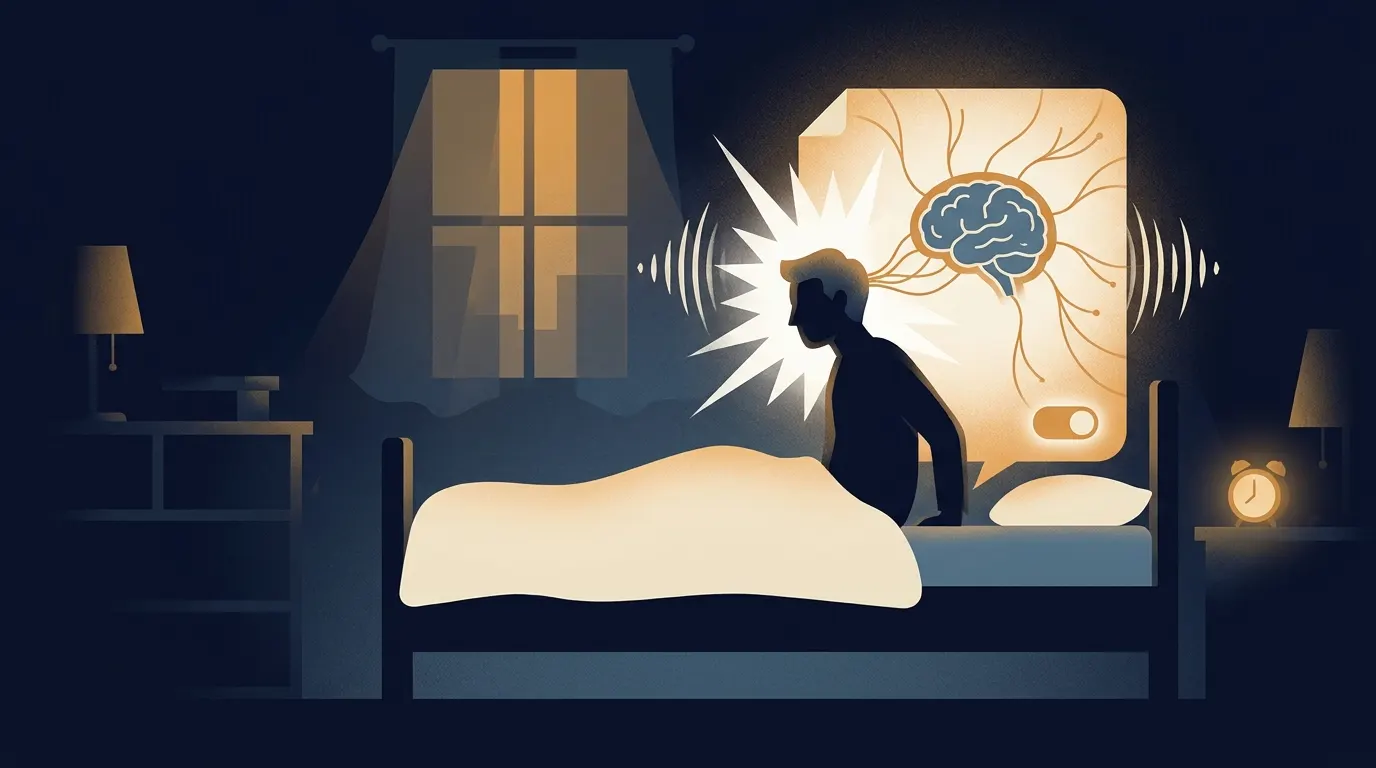
Exploding head syndrome is a sudden, very loud bang or flash of light that you perceive just as you fall asleep, even though nothing happened in the room. Sleep scientists class it as a benign sensory parasomnia. It is painless, it causes no damage, and it is more common than most people realise.
Key points
- Exploding head syndrome is a benign sensory parasomnia: your brain creates the perception of a loud noise or flash as you fall asleep or wake.
- The leading explanation is a misfire in the brain's shutdown sequence, where sensory neurons fire a brief burst when they should be going quiet.
- One study of students found that about 18% had experienced it at some point (Sharpless, 2015).
- True exploding head syndrome is painless, and episodes are more likely when you are short of sleep or under stress.
Picture the scene. You are warm, heavy and almost gone. Then a gunshot goes off inside your skull, or a door slams with impossible force, or an electrical crack arrives with a white flash behind your eyes. You sit bolt upright with your heart hammering. The house is silent, nothing has moved, and nobody else has stirred.
What is exploding head syndrome?
Exploding head syndrome is a harmless glitch in the senses at the border between waking and sleep. The name is far more alarming than the thing itself. There is no explosion and nothing wrong with your head.
There is also no sound in the room. Your brain generates the perception of an enormous noise, a flash, or both, at the moment of falling asleep or waking (Sharpless, 2014). The experience is vivid and convincing, and it has no physical cause outside you.
The American Academy of Sleep Medicine lists it in its International Classification of Sleep Disorders, the standard reference that sleep specialists use.
Why do you hear a loud bang when falling asleep?
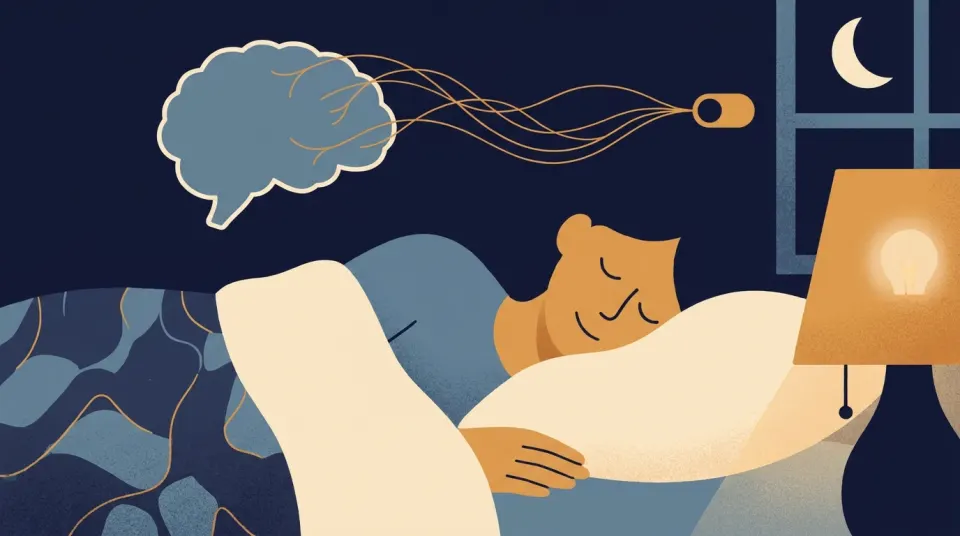
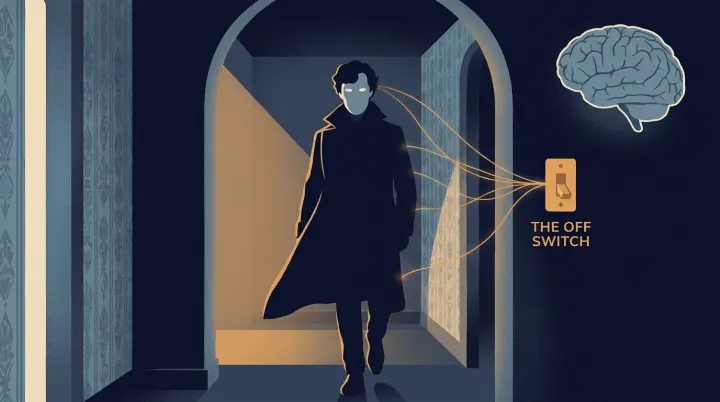
The leading explanation is a misfire in the brain's shutdown sequence. Sensory neurons that should fade to silence fire one brief, disorganised burst instead, and your brain reads that burst as a real noise.
Falling asleep feels smooth from the inside, but your brain does not switch off like a light. Its regions power down in sequence. Motor control, sensory processing and awareness each go quiet in turn, and the body passes from waking into sleep.
The neurons that handle sound and vision are meant to fade down to nothing as you cross over. On almost every night of your life they do exactly that.
Just occasionally, the fade may go wrong. A cluster of those sensory neurons fires a sudden burst at the exact moment it was meant to go dark. Your brain receives a violent spike of activity in the regions that handle sound and light, and it interprets the spike the only way it can.
You do not imagine a bang. Your brain hears one that was never there.
Why does the bang sound so loud?
The bang arrives out of near-silence, so your brain has no quiet context to measure it against. Nothing scales it down. You experience it at full volume, as though the loudest thing in the world happened inches from your head.
The same quirk explains the flash of light that some people get instead of the bang, or alongside it. In those episodes the visual neurons misfire where the auditory ones usually do.
Is it related to the falling jolt?
Yes. Exploding head syndrome and the hypnic jerk belong to the same family, because both are misfires at the handover from waking into sleep.
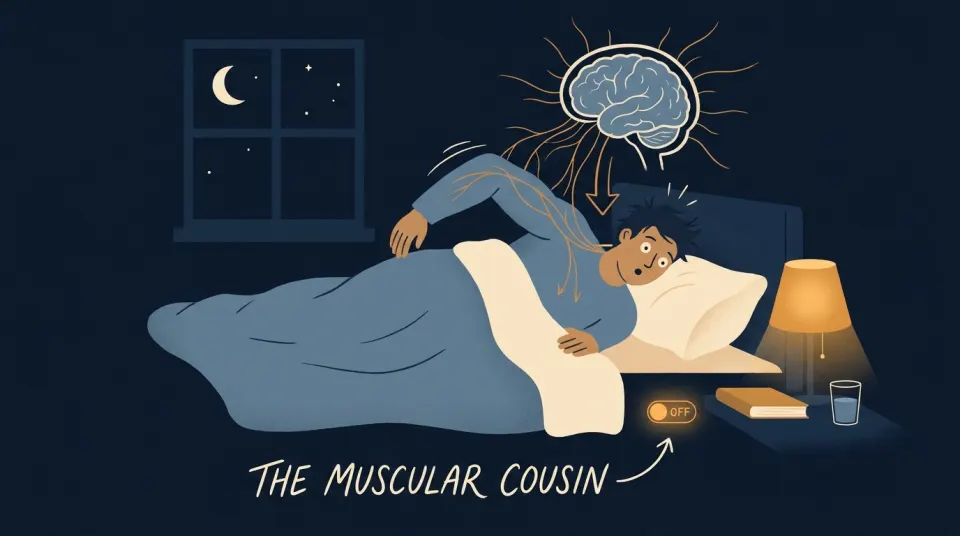
The hypnic jerk is the sudden falling sensation and full-body twitch as you drop off. That misfire strikes the muscles. Exploding head syndrome strikes the senses. One shakes the body and the other shakes the ears.
Seen that way, the second suspect in this case is an old acquaintance. The border into sleep is a busy crossing, and brief glitches there are ordinary.
How common is exploding head syndrome?
About 18% of students in one study had experienced it at some point (Sharpless, 2015). That is close to one in five people in the room.
It feels rare because almost nobody talks about it. Telling someone you were blasted awake by a deafening bang that made no sound feels absurd, and a little frightening to admit. So people keep quiet, and each one assumes they are the strange exception.
What makes an episode more likely?
Sleep deprivation and stress both appear to raise the odds. An exhausted, wound-up brain tends to manage the shutdown sequence more clumsily, and that leaves more room for a misfire. The falling jolt grows more violent when you are exhausted for the same reason.
This is where a harmless event can start to cause real trouble. The cause is fear, because no damage is involved. An episode is so violent and so convincing that some people become frightened of going to sleep at all, and lie braced for the next one.
Then a loop forms:
- Fear raises your stress and costs you sleep.
- Lost sleep and higher stress make a misfire more likely.
- The next episode deepens the fear.
Dread of the bang ends up feeding the bang. The same thing happens in the insomnia paradox, where a tense, watchful mind keeps sleep away.
The verdict
Nothing exploded. At the threshold of sleep, a handful of sensory neurons fired one last burst when they should have gone quiet, and your brain experienced that burst as a crash or a flash. The event is painless and leaves no trace. What gives it power is fear, lost sleep and stress, and all three ease once you know what the bang is.
What actually helps
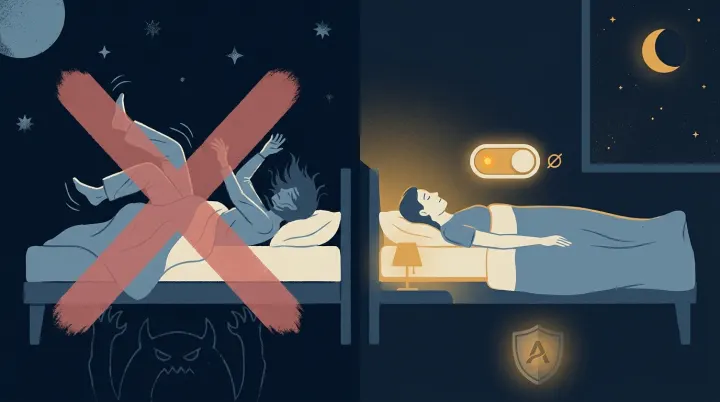
- Know what the bang is. For most people the single most useful thing is understanding that the episode is a harmless misfire. Fear fuels the loop, and episodes often become rarer and milder once the fear goes.
- Protect your sleep. A rested brain makes a cleaner handover into sleep than an exhausted one.
- Lower your stress where you can. A calmer nervous system crosses the border more smoothly.
- Let the episode pass. If it happens tonight, let your heart settle and remind yourself that nothing happened and nothing is wrong.
Most people need nothing more than reassurance, regular sleep and less stress.
When to see a GP
True exploding head syndrome is painless. It is a sound and a fright, nothing more.
If what you experience comes with real physical pain, weakness, lingering confusion or any other neurological symptom, that is not exploding head syndrome. See a GP.
Episodes that are frequent, or distressing enough to wreck your sleep even though you understand them, are also worth a conversation with a GP or a sleep specialist. This article is educational and is not medical advice.
Quick answers
Is exploding head syndrome dangerous?
No. Sleep scientists class exploding head syndrome as a benign sensory parasomnia. There is no real sound, no explosion and no damage to your head. It is painless. If an episode comes with real pain, weakness or other neurological symptoms, that is not exploding head syndrome and you should see a GP.
How common is exploding head syndrome?
More common than most people expect. One study by the researcher Brian Sharpless found that about 18% of students, close to one in five, had experienced it at some point (Sharpless, 2015). It feels rare mainly because people seldom mention it to anyone.
What triggers exploding head syndrome?
Sleep deprivation and stress both appear to raise the odds of an episode. The leading explanation is that a tired, wound-up brain manages its fall-asleep shutdown sequence more clumsily, which leaves more room for sensory neurons to fire a brief burst when they should be going quiet.
Sources
- Sharpless, B.A. (2014). Exploding head syndrome. Sleep Medicine Reviews, 18(6), 489-493. View source ↗
- Sharpless, B.A. (2015). Exploding head syndrome is common in college students. Journal of Sleep Research, 24(4), 447-449. View source ↗
- American Academy of Sleep Medicine (2014). International Classification of Sleep Disorders, 3rd edition (ICSD-3). Darien, IL: AASM. View source ↗
NightWise is educational content based on published sleep research. It is not medical advice. If something about your sleep worries you, speak to your GP or a sleep specialist.
Comments
Loading comments…