Why Do We Sleepwalk? A Brain Caught Half-Awake
Sleepwalkers are not acting out dreams. Part of the brain has woken from deep sleep and the rest has stayed behind.
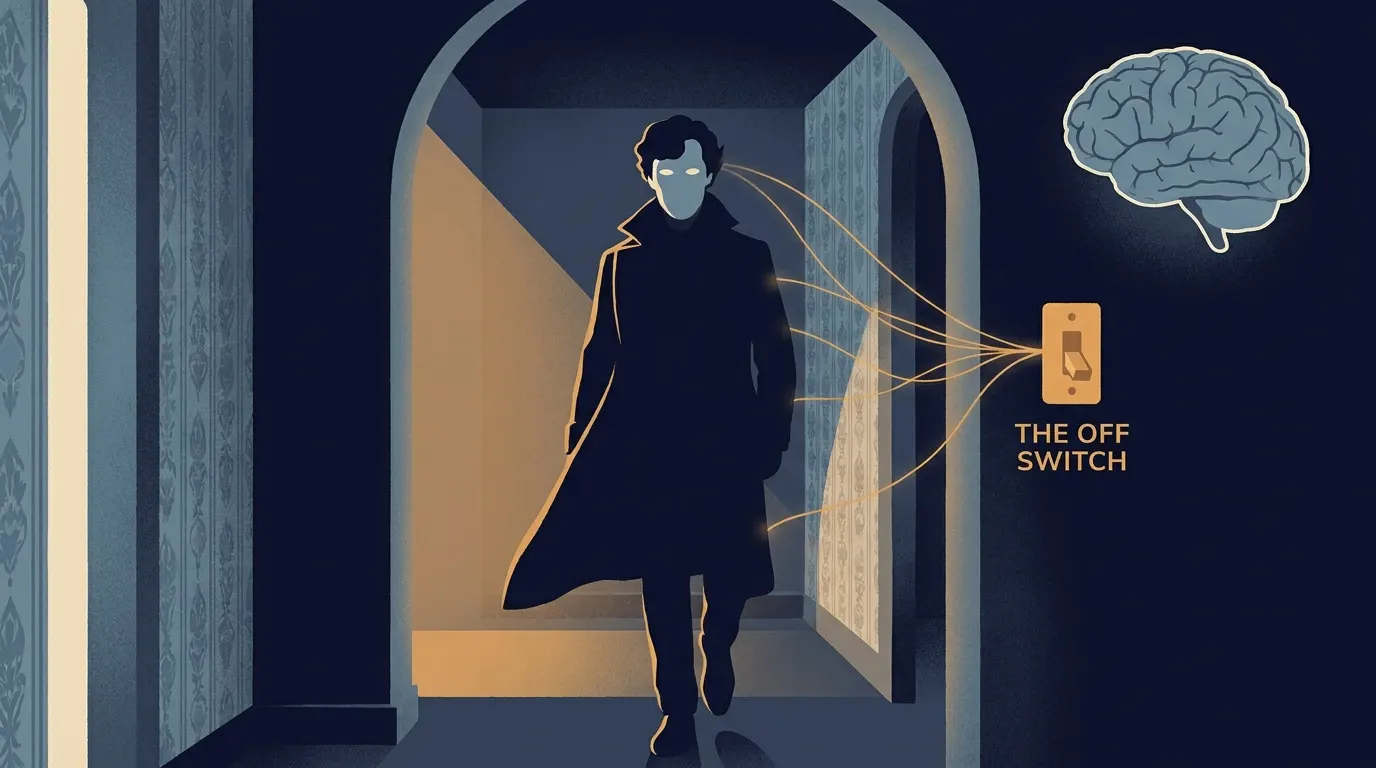
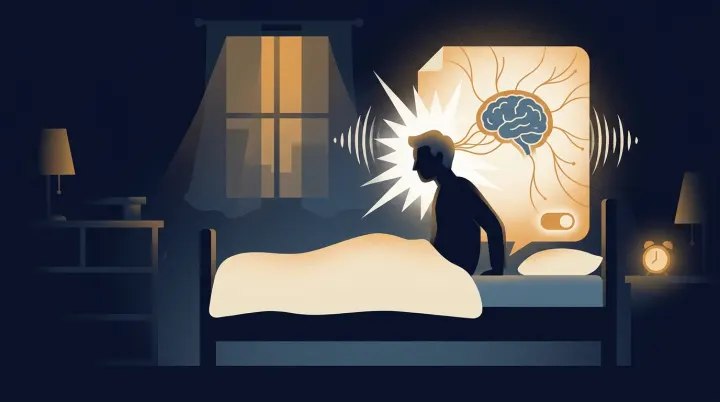
We sleepwalk when the brain only half-wakes from deep sleep. The circuits for movement and basic emotion switch on, while the regions for awareness, memory and judgement stay asleep. The body gets up and walks, and the conscious mind stays behind. Sleepwalkers are not acting out a dream.
Key points
- Sleepwalking happens in deep slow-wave (N3) sleep, usually in the first third of the night, and not during REM dreaming.
- It is an incomplete arousal: movement and emotion circuits wake while the regions for awareness, memory and judgement stay asleep.
- Sleep deprivation, fever, alcohol, stress and some medications can trigger it, and it runs in families.
- The walking is usually harmless, and the real hazards are stairs, doors, windows and roads.
It is past midnight when the figure sits up, stands, crosses the dark bedroom and walks into the hallway. The eyes are open and the face is blank. It moves as though headed somewhere specific, and in the morning it will remember none of this. The case turns on one question: which part of the brain is awake, and which part is still out cold?
Are sleepwalkers acting out their dreams?
No, and this is the first suspect to rule out. Vivid dreams happen in REM sleep, and during REM your body is paralysed from the neck down. A person deep in a dream is the least likely person in the house to be walking anywhere. That same paralysis, arriving at the wrong moment, is what you feel in sleep paralysis.
Sleepwalking belongs to almost the opposite state. It happens in deep slow-wave sleep, the heavy N3 stage that dominates the first third of the night (Zadra et al., 2013). Sleep scientists class it as an NREM parasomnia, or a disorder of arousal.
What happens in the brain during sleepwalking?
Part of the brain wakes and part stays in deep sleep. The key phrase is incomplete arousal. Something tries to wake the sleeper from their deepest sleep, and the wake-up only half succeeds.
In 2000, researchers led by Claudio Bassetti scanned the brain of a sleepwalker during an episode (Bassetti et al., 2000). Some regions were as active as in a person awake. These were the circuits for movement and basic emotion, the parts that can stand a body up, drive it forward and give it a vague sense of purpose or fear.
The rest of the brain stayed in deep sleep. The regions for conscious awareness, for forming memories and for judgement remained offline. The body is out of bed and moving through the house with nobody conscious at the wheel.
A sleepwalker is awake and asleep at the same time: the body has left the bed and the conscious mind has not.
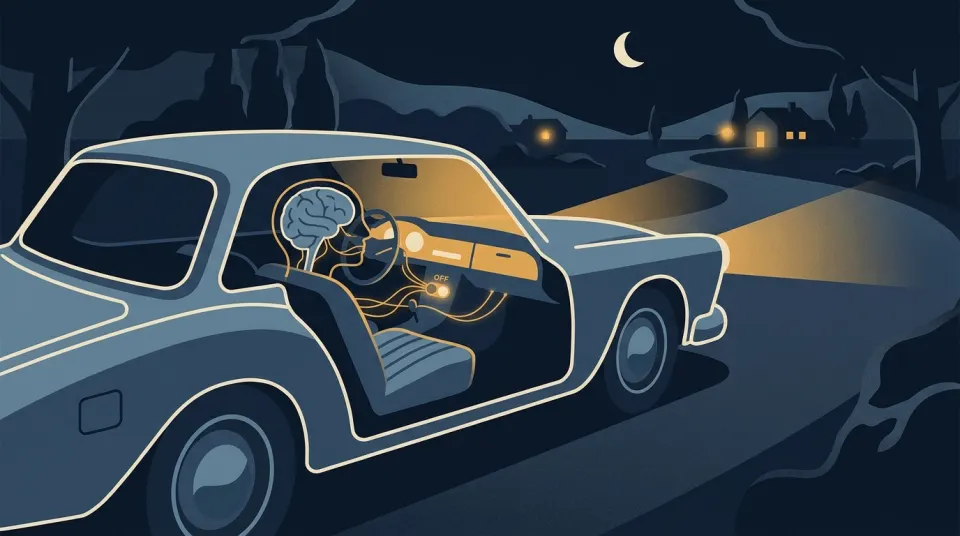
Why are a sleepwalker's eyes open?
Because the parts of the brain that move the eyes are awake, and the parts that consciously see and understand are not. The same split explains the other strange features of sleepwalking.
- No memory. Recording a memory needs regions that never woke, so the night leaves no footage. Questioning a sleepwalker is pointless for the same reason.
- Free movement. This is N3 and not REM, so the dream paralysis is not switched on. Nothing holds the muscles down.
- Familiar actions only. Sleepwalkers walk, talk, tidy, dress and eat. In rare documented cases they have unlocked doors, cooked or driven familiar routes. These are well-practised routines that run on their own, like a song your hands can play without you. Anything that needs fresh planning is missing, because planning is the faculty that stayed asleep.
What triggers sleepwalking?
Anything that disturbs deep N3 sleep and tries to drag the sleeper upward before the whole brain is ready.
Sleep deprivation is a major trigger. After lost sleep, the brain rebounds with more intense deep sleep, and more deep sleep means more chances for a faulty arousal. Fever can do it. So can alcohol, high stress and certain medications. The depth of N3 is also the reason a badly timed alarm leaves you foggy, as in naps that make you feel worse.
Genetics runs through all of it. Sleepwalking is strongly familial, and a child with a parent who sleepwalked is far more likely to do it too.
It is most common in childhood, when deep sleep is most abundant, and for most people it fades as they grow. Adults have less deep sleep, so there is less raw material for these arousals. That is why a first episode in adulthood deserves a closer look.
Is sleepwalking dangerous?
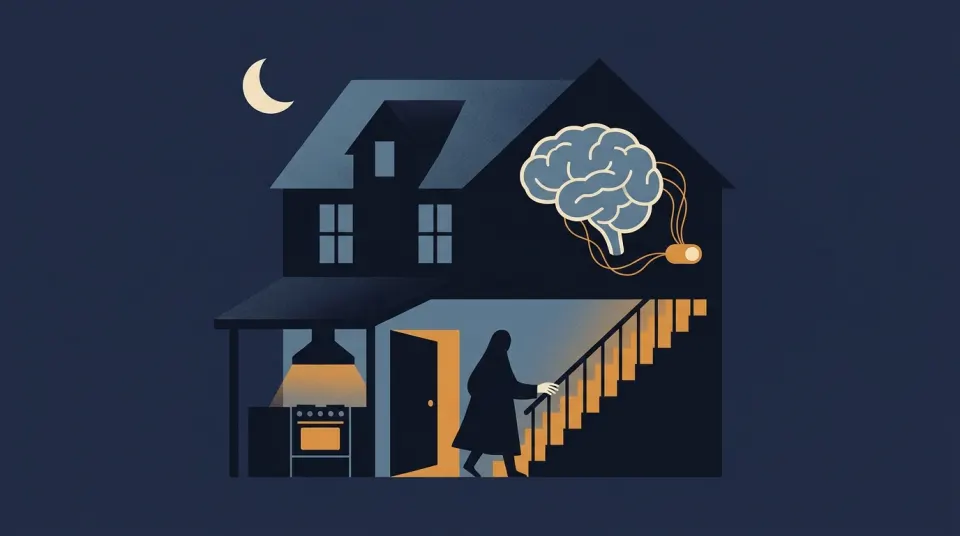
The walking is usually harmless. The house is the danger. A conscious mind avoids the staircase, the locked door and the hot stove, and a sleepwalker has no judgement online to do the same. The rare tragic cases almost always involve a staircase, a window or a road.
If you find someone sleepwalking, resist the urge to shake them awake. Pulling a brain out of an incomplete arousal can leave the person confused, frightened and disoriented, and they may lash out before they understand where they are. Stay calm and quiet. Steer them back toward bed with soft words and a light touch. In almost every case they settle back into full sleep, none the wiser.
The verdict
Sleepwalking is a brain caught on the border between sleep and waking. An arousal from deep N3 sleep half succeeds, so the movement and emotion circuits wake while awareness, memory and judgement stay asleep. That one split accounts for the open eyes, the blank face, the automatic routines and the missing memory. Waking and sleeping behave like a dimmer more than a switch, and a sleepwalker has stopped halfway for a few minutes.
What actually helps
These points are about safety and sleep habits for a household with a known sleepwalker. They are not treatment.
- Make the room safe. Lock outer doors and windows, put a barrier at the top of the stairs, and clear the floor of anything to trip on.
- Guide and do not shake. Lead the person back to bed calmly and quietly.
- Protect deep sleep. The triggers all work through disturbed deep sleep, so getting enough sleep stops the brain rebounding so hard.
- Ease back on alcohol. It is one of the known triggers.
- Manage stress, and take extra care during a fever. Both make faulty arousals more likely.
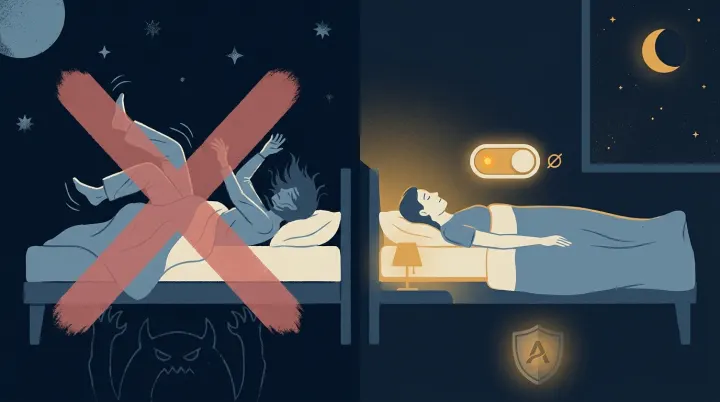
You cannot reliably stop the walking, but you can make the house a safe place to wander.
When to see a GP
Occasional sleepwalking in childhood is common and usually harmless. Speak to a GP, who can refer you to a sleep clinic or sleep specialist, if episodes are frequent, violent or cause injury, or if sleepwalking appears for the first time in adulthood. A proper assessment can rule out other conditions. This article is educational and is not medical advice.
Quick answers
Are sleepwalkers acting out their dreams?
No. Vivid dreams happen in REM sleep, when the body is paralysed from the neck down. Sleepwalking happens in deep slow-wave sleep, usually in the first third of the night. The body is free to move at that stage, and the parts of the brain that handle awareness are still asleep.
Should you wake a sleepwalker?
It is better not to shake them awake. Pulling a brain out of an incomplete arousal can leave the person confused, frightened and disoriented, and they may lash out. Stay calm and quiet, and steer them back to bed with soft words and a light touch.
Why don't sleepwalkers remember anything?
Forming a memory needs the brain's recording regions to be awake, and in a sleepwalker they stay in deep sleep. Movement circuits are active, but nothing is stored. That is also why questioning or arguing with a sleepwalker achieves nothing. None of the exchange survives until morning.
Sources
- Zadra, A., Desautels, A., Petit, D. & Montplaisir, J. (2013). Somnambulism: clinical aspects and pathophysiological hypotheses. Lancet Neurology, 12(3), 285-294. View source ↗
- Bassetti, C., Vella, S., Donati, F., Wielepp, P. & Weder, B. (2000). SPECT during sleepwalking. The Lancet, 356(9228), 484-485. View source ↗
- American Academy of Sleep Medicine (2014). International Classification of Sleep Disorders, 3rd edition (ICSD-3): disorders of arousal from NREM sleep. Darien, IL: AASM. View source ↗
NightWise is educational content based on published sleep research. It is not medical advice. If something about your sleep worries you, speak to your GP or a sleep specialist.
Comments
Loading comments…