Why Do We Grind Our Teeth in Our Sleep?
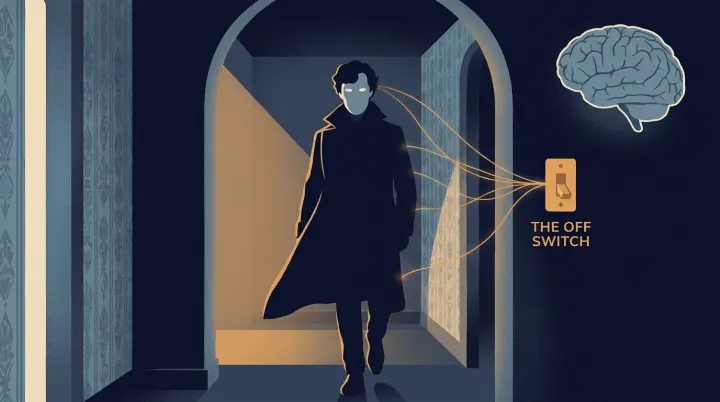
Sleep bruxism starts in the sleeping brain. The jaw clenches on tiny arousals that last seconds and leave no memory.
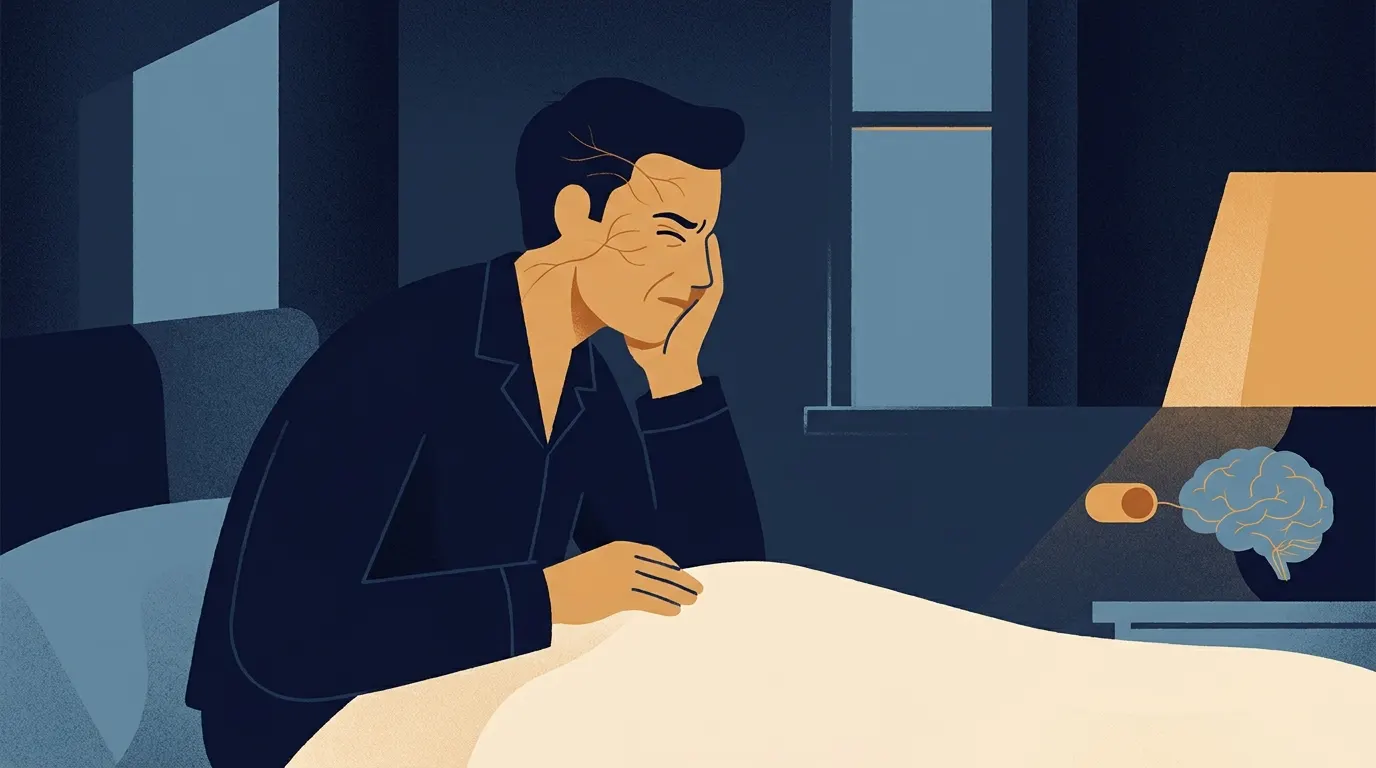
We grind our teeth in our sleep because the jaw muscles fire during micro-arousals, brief shifts toward lighter sleep that last only seconds and leave no memory. Brain activity and heart rate surge first, and the jaw clenches on that surge. The grinding is a by-product of the arousal, not a habit.
Key points
- Sleep bruxism is classed as a sleep-related movement disorder, and it begins in the sleeping brain, not in the teeth.
- Grinding comes in bursts that follow micro-arousals: brain activity rises, heart rate speeds up, then the jaw muscles fire.
- Stress, anxiety, caffeine, alcohol and smoking add more arousals to the night, which gives the jaw more to clench on.
- A dentist-fitted night guard protects the teeth but does not stop the grinding itself.
You may know the evidence already. You wake with an aching jaw, a tight band of headache across your temples and teeth that feel tender. Or a partner tells you that in the small hours you sound like someone chewing gravel. You remember none of it.
What is sleep bruxism?
Sleep bruxism is the clinical name for grinding and clenching the teeth during sleep. Medicine classes it as a sleep-related movement disorder, not a dental quirk (American Academy of Sleep Medicine, ICSD-3).
That classification is the first clue in the case. The problem begins in the sleeping brain, and the jaw is where it shows.
When researchers recorded the jaw muscles through the night, they found the grinding does not run continuously. It comes in short bursts of chewing-muscle activity scattered across the night. Scientists named these bursts rhythmic masticatory muscle activity, or RMMA.
What causes teeth grinding during sleep?
The bursts follow micro-arousals. When Takafumi Kato, Gilles Lavigne and colleagues looked at exactly when the jaw fired, they found a clear, repeatable sequence (Kato et al., 2001):
- A micro-arousal begins.
- Brain activity and heart rate surge upward.
- The jaw muscles fire.
That order matters. It means the grinding is a side effect of the body briefly revving itself up, with the powerful jaw muscles caught in the surge and firing along with everything else.
The grinding is never the main event, because it follows the arousal like clockwork.
There may be an old logic to why the jaw joins in. The clench looks like part of a primal readiness response. The body, briefly on alert, tenses the strong muscles of the mouth and airway as if preparing to act, with no danger present.
What is a micro-arousal?
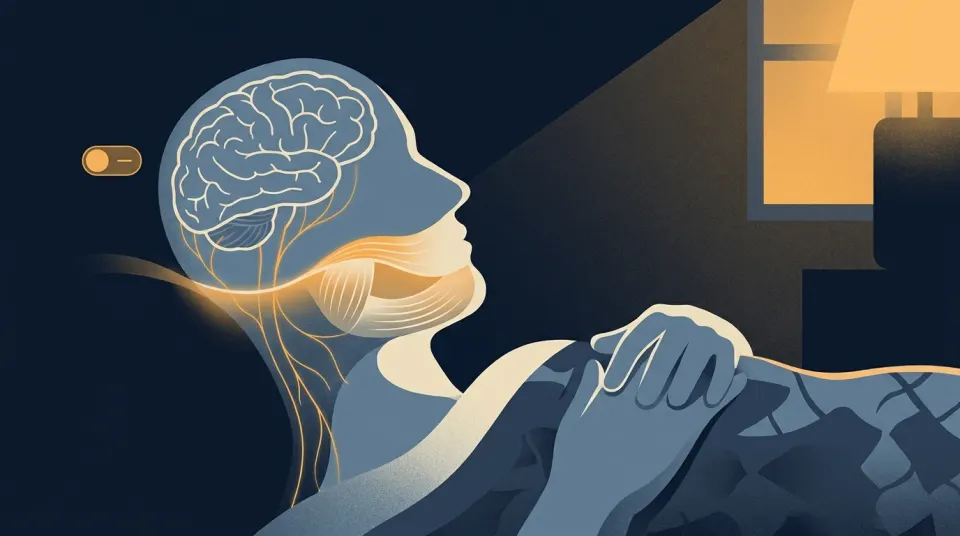
A micro-arousal is a tiny, brief shift toward lighter sleep. It lasts only seconds, far too short to wake you or leave a memory.
Micro-arousals are common. Every one of us has dozens of them a night, sometimes hundreds. They are a normal punctuation of sleep, part of how the sleeping brain stays lightly tethered to the world and the body.
During one, your heart rate ticks up and your brain activity sharpens for a heartbeat or two. Then you sink back down. You never notice them. They are a different thing from the full awakenings we cover in why you wake up at 3am.
Does stress make you grind your teeth at night?
Yes, though not in the way people imagine. You are not lying there dreaming anxiously and gnashing in response. A stressed, anxious nervous system runs at a higher pitch even in sleep, and it produces more frequent and more forceful arousals for the grinding to follow.
That is the second suspect in this case: anything that raises the background level of arousal through the night. The usual stimulants belong here too. Caffeine late in the day, alcohol in the evening and smoking all stir up the nervous system and fragment sleep, scattering more micro-arousals across the night.
Two more threads run through the file. Bruxism runs in families, so genetics plays a part. It is also most common in younger adults and eases for many people as the years pass.
Is teeth grinding linked to sleep apnoea?
In some people it is. Bruxism keeps company with other arousal-linked conditions, and sleep apnoea is the one that matters most.
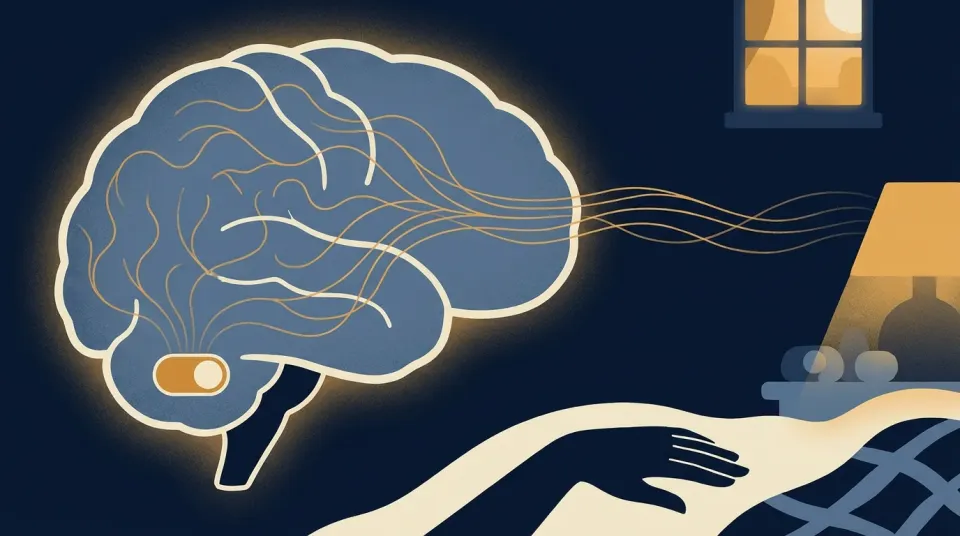
In apnoea, the airway repeatedly narrows or closes during sleep. The brain jolts itself with an arousal to restart breathing, over and over, all night. Each of those arousals is a potential trigger for a burst of grinding.
So two problems that look unrelated can share one root in a restless, over-aroused night. For some people, treating the breathing problem quietens the jaw as well. Broken sleep of this kind is also one reason you can feel tired after eight hours in bed.
Can grinding damage your teeth?
Yes, and the damage is worth taking seriously. The forces involved are large. Over months and years, nightly grinding can wear teeth flat and crack enamel.
It also leaves the jaw muscles chronically overworked and aching. That overwork is behind the tight, gripping headaches many grinders wake to.
The verdict
The grinding jaw is not a bad habit, and it is not a message from a troubled mind. It is a muscle firing on the brief, invisible arousals that ripple through every night's sleep. Stress, stimulants and, in some people, sleep apnoea add more arousals, and more arousals mean more grinding. Calm the night and the jaw has less to follow.
What actually helps
These are the practical points from the research, given as explanation and not as treatment. A dentist or GP is the right person to advise on your own case.
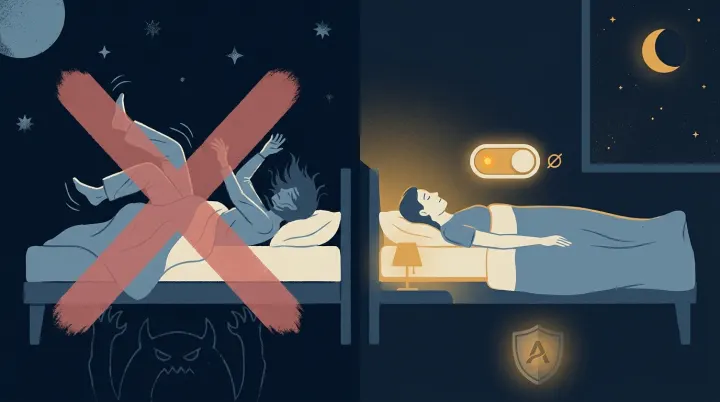
- A night guard protects the teeth. Fitted by a dentist and worn over the teeth, it takes the wear in place of your enamel. It does not stop the grinding, because the arousals and the clenching continue underneath it.
- Less evening caffeine and alcohol. Both fragment sleep and add micro-arousals.
- Lower stress and anxiety. A calmer nervous system produces fewer and weaker arousals for the jaw to follow.
- Steady, sufficient sleep. A regular, full night is calmer and less fragmented to begin with.
- A breathing check if there are signs. Loud snoring, gasping or pauses that a partner notices are worth having assessed. Treating an underlying apnoea can reduce the grinding at its source.
The guard deals with the symptom and the other points address the cause. They work best together. Grinding is one of several night-time events driven by a brain that partly rouses without waking you, a theme that also runs through sleepwalking.
When to see a GP
See a dentist or your GP if you have persistent jaw pain, worsening headaches or visible damage to your teeth. These are reasons to get checked instead of enduring it.
Grinding paired with loud snoring or witnessed pauses in breathing is a clear signal to be screened for sleep apnoea. Your GP can refer you to a sleep specialist for that assessment.
This article is educational and is not medical advice.
Quick answers
Is teeth grinding in sleep caused by stress?
Partly. Stress and anxiety do worsen sleep bruxism, but indirectly. A stressed nervous system runs at a higher pitch even in sleep and produces more frequent, more forceful micro-arousals. The jaw-muscle bursts follow those arousals, so more arousals mean more grinding.
Does a night guard stop teeth grinding?
No. A night guard fitted by a dentist sits between the upper and lower teeth and takes the wear in place of your enamel. The arousals keep coming and the jaw keeps clenching underneath it. The guard protects the teeth and leaves the cause untouched.
Is teeth grinding linked to sleep apnoea?
In some people, yes. In sleep apnoea the airway repeatedly narrows or closes and the brain uses an arousal to restart breathing. Each arousal can trigger a burst of grinding, which is why treating the breathing problem quietens the jaw for some people.
Sources
- Kato, T., Rompre, P., Montplaisir, J.Y., Sessle, B.J. & Lavigne, G.J. (2001). Sleep bruxism: an oromotor activity secondary to micro-arousal. Journal of Dental Research, 80(10), 1940-1944. View source ↗
- American Academy of Sleep Medicine (2014). International Classification of Sleep Disorders, 3rd edition (ICSD-3): sleep-related bruxism, listed under sleep-related movement disorders. View source ↗
NightWise is educational content based on published sleep research. It is not medical advice. If something about your sleep worries you, speak to your GP or a sleep specialist.
Comments
Loading comments…