Why You Wake Up at 3am and Can't Fall Back Asleep
Everyone surfaces in the small hours. The waking is normal sleep architecture, and the trouble starts with what you do next.
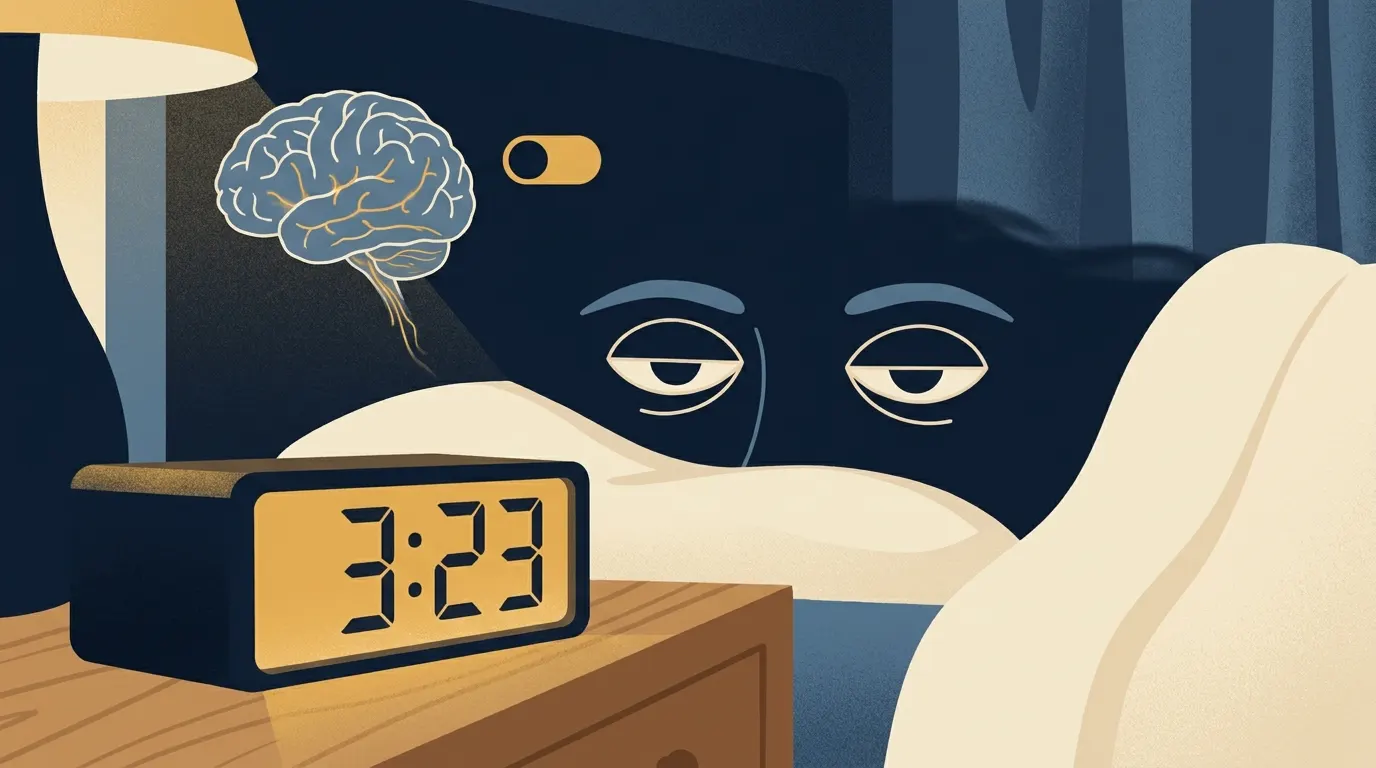
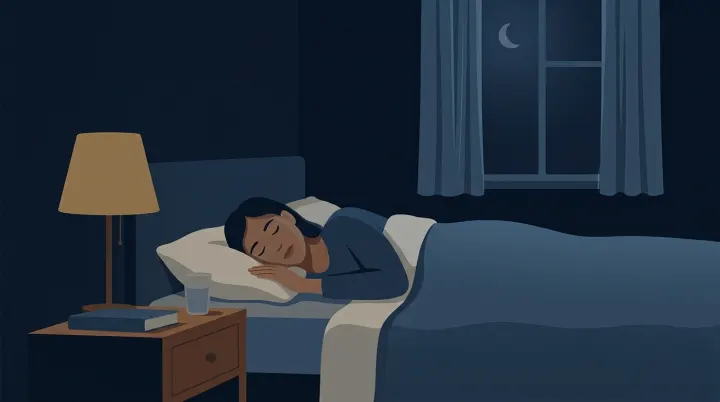
You wake at 3am because sleep is built to be lighter then. Everyone surfaces briefly between sleep cycles, and in the second half of the night those cycles are shallow enough for you to notice. The waking itself is normal. What keeps you awake is the response: checking the clock, reaching for the phone and trying to force sleep.
Key points
- Healthy sleepers surface toward wakefulness roughly ten to fifteen times a night and forget almost all of it.
- Sleep is lighter in the second half of the night, when REM takes over and deep sleep fades.
- Cortisol is already rising and core body temperature is near its low point in the early hours.
- What keeps you awake is a learned loop of clock-checking, phone light and trying to force sleep.
It is 3:23am. No alarm went off and no noise woke you. Your eyes are open anyway, and your mind is suddenly, infuriatingly alert. This case has three suspects, and only one of them is worth worrying about.
Is waking up at 3am normal?
Yes. Healthy sleepers surface toward wakefulness roughly ten to fifteen times a night. Almost all of those moments vanish before anyone notices them.
On the night you remember, one of them got caught. Nothing malfunctioned. You opened your eyes on a waking you have every night.
Why is sleep lighter in the second half of the night?
Sleep gets lighter towards morning because REM takes over and deep sleep fades. Sleep runs in cycles of about ninety minutes, with deep sleep and REM trading places all night.
Early in the night, heavy deep sleep dominates, and it is hard to wake from. By the second half the balance has flipped. REM sleep is lighter and you are pulled out of it with less effort.
So a 3am waking lands where your sleep architecture is thinnest. Suspect one is your own sleep doing its job. A related case file covers why older people wake up early.
Did people always sleep through the night?
No. Before electric light, a waking in the middle of the night was ordinary.
The historian A. Roger Ekirch went through centuries of diaries and court records. He found that pre-industrial people routinely slept in two shifts, a "first sleep" and a "second sleep", with an hour or two of calm waking in between (Ekirch, 2001). Nobody treated it as a problem.
In 1992 the researcher Thomas Wehr tested the idea in a laboratory. He kept volunteers in fourteen hours of darkness each night, like a long winter night. Within weeks their sleep split into two bouts with a quiet waking gap between them (Wehr, 1992).
Before electric light, people slept in two shifts, and nobody called the gap between them insomnia.
What is your body doing at 3am?
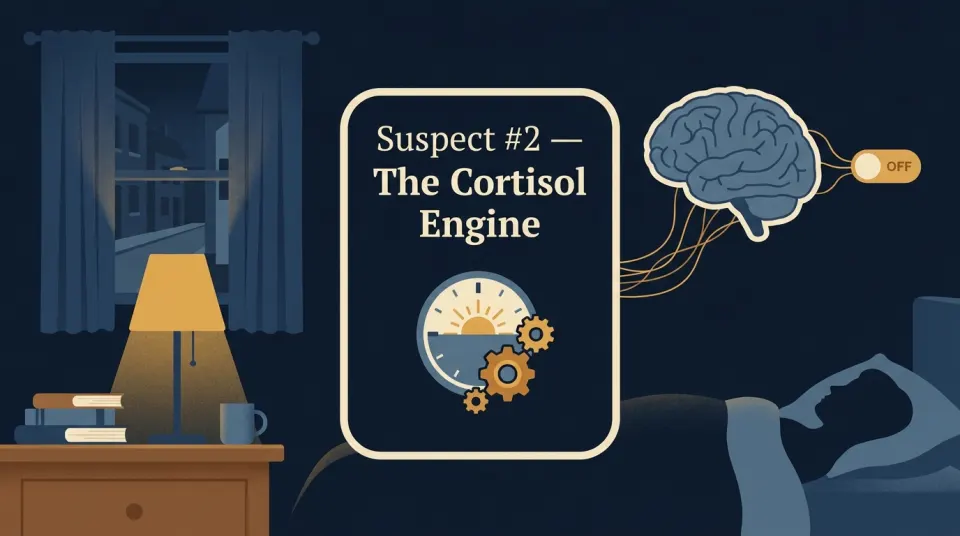
Your body has already started preparing for morning. Two systems are moving while you sleep.
The first is cortisol. It is lowest around midnight and then climbs through the early hours. It builds towards the cortisol awakening response, a surge about 30 to 45 minutes after you wake (Clow et al., 2010). At 3am that climb is under way.
The second is temperature. Your core body temperature bottoms out at around four to five in the morning, roughly two hours before your usual wake time. That trough is part of the shift towards day, and it can nudge you out of light sleep.
That makes two suspects and no crime. Light sleep by design and a hormone clock starting early are both normal. Neither explains the part that hurts.
Why can't you fall back asleep?
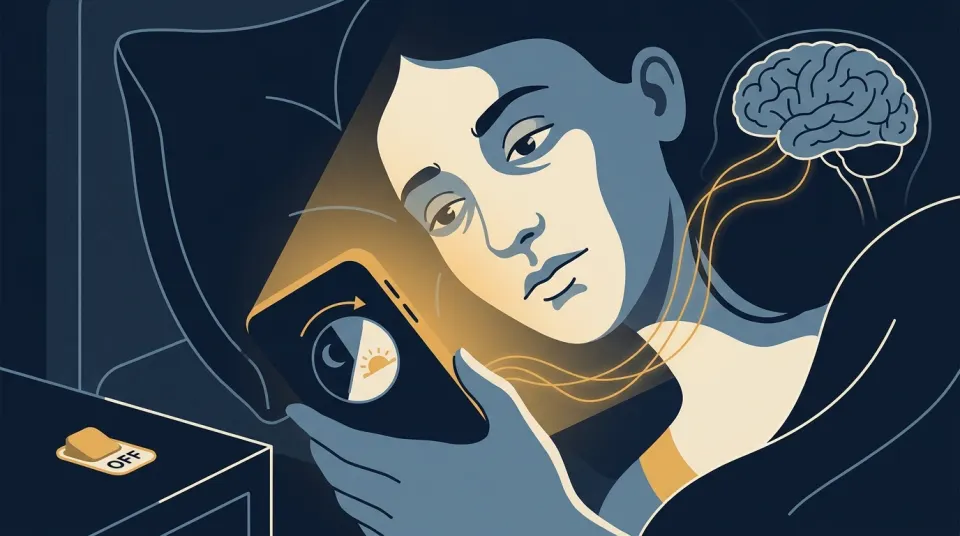
You can't fall back asleep because your arousal system has switched on and will not stand down. This is suspect three, and it comes in several parts.
Hyperarousal. Dieter Riemann and colleagues reviewed the evidence for the hyperarousal model of insomnia. It describes chronic insomnia as a state of raised mental and physical arousal across the full 24 hours (Riemann et al., 2010). At 3am that system should be powering down, and sometimes it does not.
A learned link. The psychologist Richard Bootzin showed that the brain can learn this response. Lie awake and frustrated night after night, and your brain starts to treat the bed as a cue for wakefulness (Bootzin & Epstein, 2011).
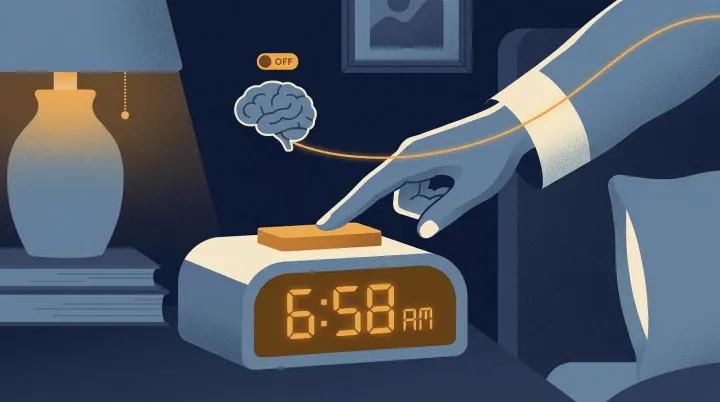
The clock. You roll over, see 3:23 and do the sum: only four hours left. That glance is a small alarm of its own. It raises alertness at the moment you need the opposite.
The phone. Bright light, even from a small screen, tells your body clock that day has arrived. Add a stressful headline or a work email and you have light, information and adrenaline together.
Alcohol. It sedates you into sleep fast, but your body metabolises most of it in four to five hours. That leaves a rebound in arousal in the second half of the night (Ebrahim et al., 2013). Late caffeine and evening stress add to the same hum.
The verdict
The waking was never the crime. Your sleep architecture, your cortisol and your temperature were all doing what they are built to do at 3am. The culprit is the loop that follows: check the clock, grab the phone, try to force sleep. Repeat it nightly and your brain files 3am under "time to be alert". That loop is a learned habit, and a habit can be retrained.
What actually helps
These points come from stimulus control, the core of cognitive behavioural therapy for insomnia (CBT-I). They describe what the evidence supports and are not a treatment plan.
- Use the twenty-minute rule. If you are wide awake for more than fifteen or twenty minutes, get up. Go to another room, do something calm and boring in dim light, and return only when you feel sleepy. This protects the link between bed and sleep.
- Stop checking the clock. Turn it away from the bed, and keep the phone out of the room.
- Keep the light dim. If you get up, use the dimmest light available.
- Keep the room cool. A cool room supports the temperature dip your body is already making.
- Stop trying to force sleep. The harder you chase it, the more alert you become. Aim to rest with your eyes closed. We cover this paradox in why you can't force yourself to sleep.
Knowing that the waking is normal helps too, because it takes away some of the anxiety that feeds the loop.
When to see a GP
Occasional 3am waking is normal. A persistent pattern is different, and so is a waking where you find you cannot move, which is sleep paralysis.
Raise it with your GP if early waking happens three or more nights a week for three months and you are exhausted in the daytime. That pattern fits chronic insomnia. Early waking with low mood or a loss of interest in things can be a feature of depression, and that is worth raising as well.
For chronic insomnia, the American College of Physicians recommends CBT-I as the initial treatment, ahead of sleeping pills (Qaseem et al., 2016). This article is educational and is not medical advice.
Quick answers
Is it normal to wake up at 3am every night?
Brief awakenings are normal. Healthy sleepers surface toward wakefulness roughly ten to fifteen times a night and rarely remember it. Sleep is also lighter in the second half of the night, when REM dominates and deep sleep fades, so a 3am waking is often one of those moments noticed.
Why can't I fall back asleep at 3am?
The usual culprit is arousal. Checking the clock, picking up a phone and trying to force sleep all raise alertness. Repeated night after night, lying awake and frustrated also trains the brain to treat the bed as a cue for wakefulness, so 3am becomes a learned alert time.
Does alcohol make you wake up at 3am?
It can. Alcohol sedates you into sleep quickly, but the body metabolises most of it in four to five hours. That leaves a rebound in arousal during the second half of the night, so an evening drink often means a waking in the early hours.
Sources
- Riemann, D. et al. (2010). The hyperarousal model of insomnia: a review of the concept and its evidence. Sleep Medicine Reviews, 14(1), 19-31. View source ↗
- Bootzin, R.R. & Epstein, D.R. (2011). Understanding and treating insomnia. Annual Review of Clinical Psychology, 7, 435-458. View source ↗
- Ekirch, A.R. (2001). Sleep we have lost: pre-industrial slumber in the British Isles. American Historical Review, 106(2), 343-386. View source ↗
- Wehr, T.A. (1992). In short photoperiods, human sleep is biphasic. Journal of Sleep Research, 1(2), 103-107. View source ↗
- Clow, A. et al. (2010). The cortisol awakening response: more than a measure of HPA axis function. Neuroscience & Biobehavioral Reviews, 35(1), 97-103. View source ↗
- Qaseem, A. et al. (2016). Management of chronic insomnia disorder in adults: a clinical practice guideline from the American College of Physicians. Annals of Internal Medicine, 165(2), 125-133. View source ↗
- Ebrahim, I.O. et al. (2013). Alcohol and sleep I: effects on normal sleep. Alcoholism: Clinical & Experimental Research, 37(4), 539-549. View source ↗
NightWise is educational content based on published sleep research. It is not medical advice. If something about your sleep worries you, speak to your GP or a sleep specialist.
Comments
Loading comments…