How Does the Brain Clean Itself During Sleep?
Each night the glymphatic system opens up and washes the day's metabolic waste out of the brain. It is one of the clearest reasons we sleep.
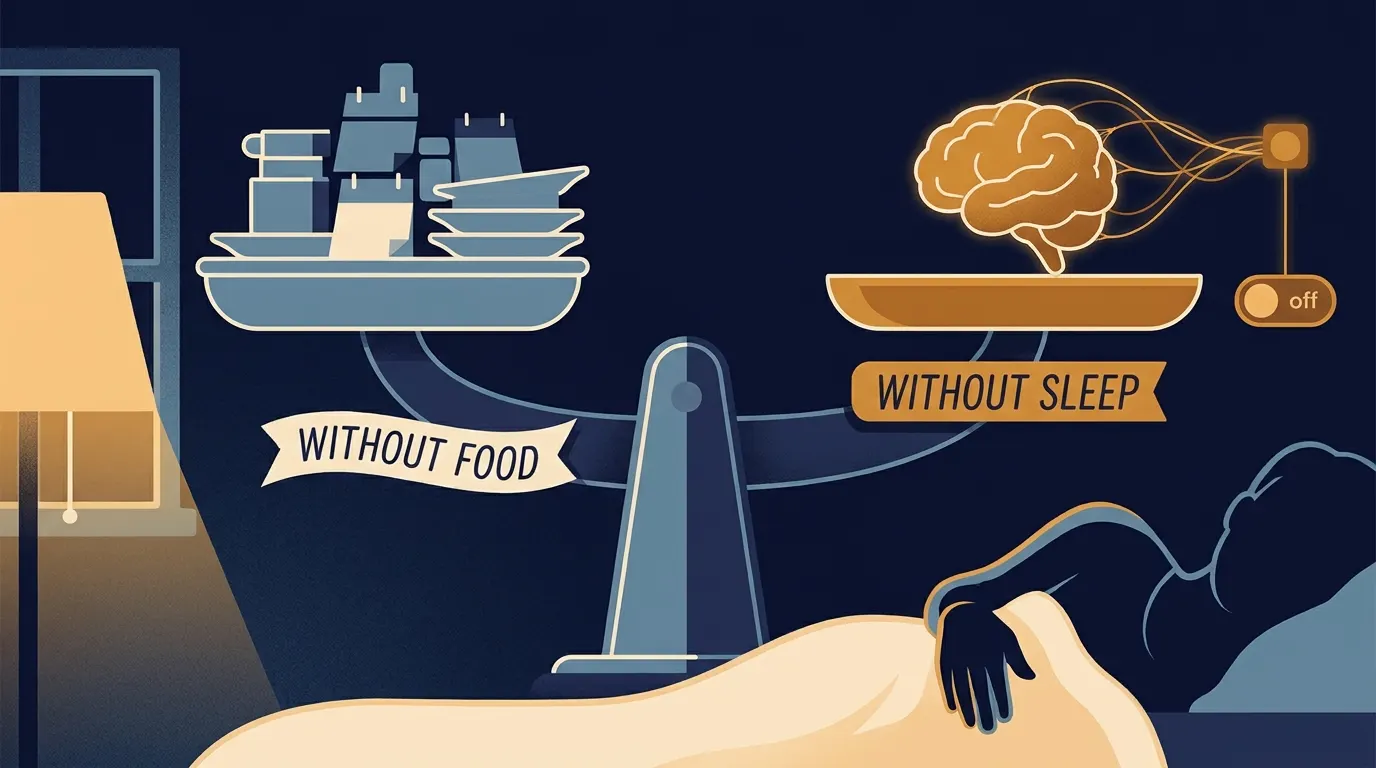
The brain cleans itself during sleep through the glymphatic system. In sleep, the spaces between brain cells widen and cerebrospinal fluid flushes through them. In the mouse study that first showed this, the spaces widened by around 60% and waste cleared far faster than in waking (Xie et al., 2013).
Key points
- The brain has no lymphatic vessels of its own, so it clears waste through the glymphatic system instead.
- In the 2013 mouse study that found it, the spaces between brain cells widened by around 60% during sleep and cerebrospinal fluid flushed waste out far faster than in waking.
- One of the proteins cleared is beta-amyloid, which rose in human brains after a single night of sleep deprivation.
- Poor sleep and dementia risk are linked, but research has not yet proven that poor sleep directly causes dementia.
That finding speaks to one of the oldest puzzles in biology. You can survive far longer without food than without sleep, and a person deprived of it for long enough begins to hallucinate. Something that costly must buy us something we cannot get any other way. This case file follows one of the strongest answers found so far.
Why does the brain need its own cleaning system?
Every working cell in your body produces waste, the metabolic ash of being alive. In most of the body, a network of drainage vessels called the lymphatic system hauls that waste away.
The brain has no lymphatic vessels of its own. It is also the hungriest, busiest organ you have. For a long time nobody knew how it cleaned up after itself.
The answer arrived in 2013, when a team led by Lulu Xie and Maiken Nedergaard watched the sleeping brain closely. They described what is now called the glymphatic system: the brain's private, night-time plumbing.
What happens in the brain when you fall asleep?
Two things happen, in order. First the tissue opens up. As the brain falls into sleep, the cells appear to shrink back and the spaces between them widen, by around 60% in the mice Xie's team measured. Picture a crowded city clearing its streets at night to let the cleaning trucks through.
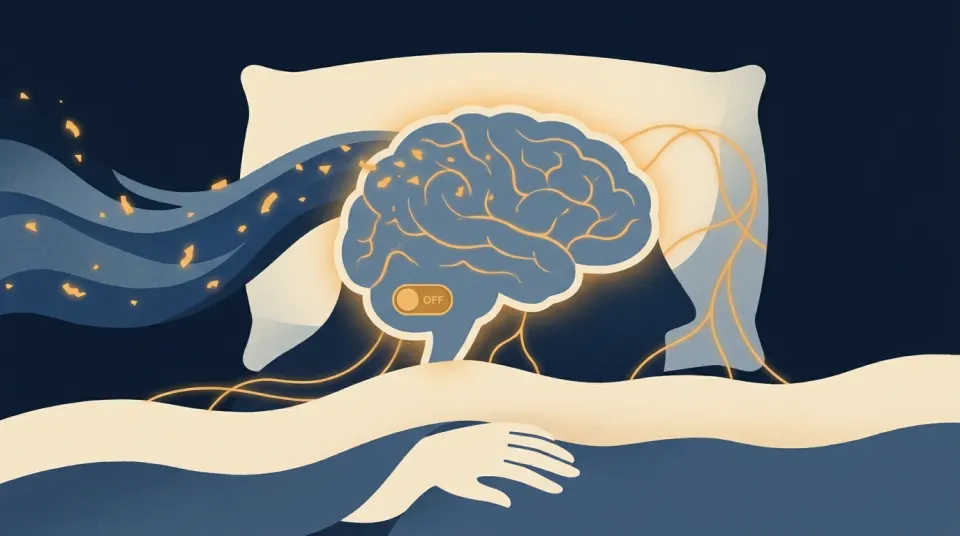
Then the fluid flows. Cerebrospinal fluid, the clear liquid that bathes your brain, moves through those widened channels. It washes between the cells and flushes out the day's metabolic waste.
Waste clearance in the brain is far more active in sleep than in waking (Xie et al., 2013; Jessen et al., 2015). The night is the brain's cleaning shift, the only time the plumbing runs at full pressure.
Every night that you sleep well, you wake to a brain that is a little cleaner than the one you went to bed with.
Why can the brain only clean itself while you sleep?
The likely answer is cost. The process is expensive in energy, and it does not sit well alongside conscious thought. The brain, it seems, cannot run its heavy machinery and think your thoughts at the same time.
So it chooses: thinking by day, cleaning by night. Sleep may be, in large part, the price your brain pays for being a machine that has to maintain itself.
The clean is at its most vigorous during deep, slow-wave sleep, the heavy N3 stage that is hardest to wake from. That is why anything that steals deep sleep costs more than it looks. Late alcohol, a chaotic schedule and a night cut short all take pressure out of the flow. Deep sleep is also the stage that thins as we age.
What waste does sleep clear from the brain?
Among the waste cleared each night is a protein called beta-amyloid. In a healthy brain it is produced, used and cleared in a constant cycle. The trouble begins only when it builds up.
Over years, beta-amyloid can clump into the sticky plaques found in the brains of people with Alzheimer's disease. In small amounts, swept out each night, it is harmless. Left to accumulate, it is one of the hallmarks of that illness.
In 2018 a study led by Ehsan Shokri-Kojori measured beta-amyloid in human brains and found that a single night of sleep deprivation left levels raised (Shokri-Kojori et al., 2018). After one lost night, a little more of the waste was still there in the morning.
Does poor sleep cause dementia?
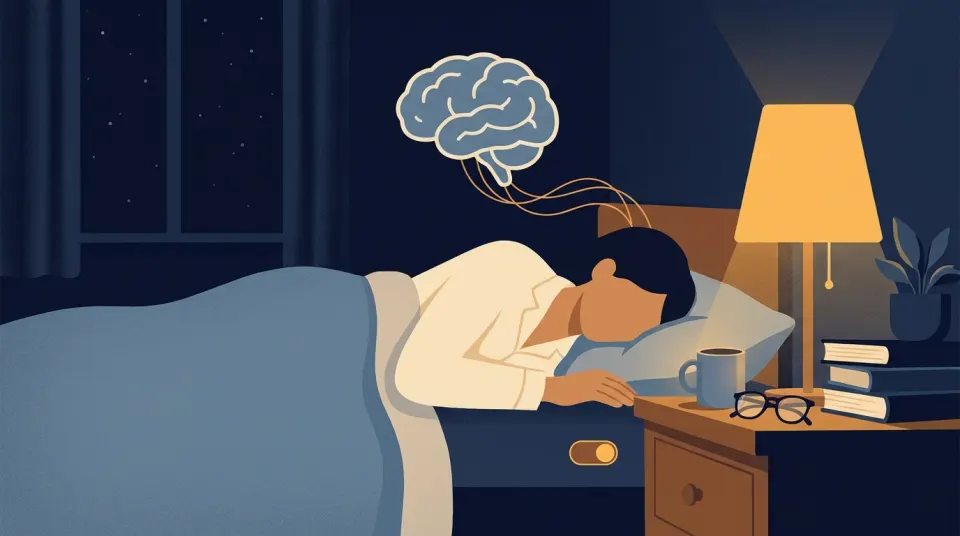
That has not been proven. Poor sleep and dementia risk travel together in the data, and the glymphatic system gives researchers a plausible mechanism that could connect them. A brain that is chronically short of sleep sends its cleaning crew home early, night after night.
The honest reading is narrower than the headlines. The link is an association backed by a strong mechanism. Scientists are still untangling cause from effect, and the finding deserves respect without exaggeration.
It also helps to keep one rough night in proportion. The system is resilient, and a good night's sleep lets it catch up. The evidence ties long-term risk to chronic, repeated short sleep, and the occasional broken night is part of being human. Lying awake worrying about it only feeds the trap of trying to force yourself to sleep.
Is waste clearance the only reason we sleep?
No. The full answer to "why do we sleep" is plural. Sleep also files your memories, soothes your emotions, and restores your body, your metabolism and your immune system. Waste clearance is one of the largest and most concrete pieces of that answer.
It may even explain how a bad night feels. That heavy, swollen-headed, slightly poisoned sensation after too little sleep may be, in part, a brain that did not get fully cleaned and is carrying yesterday's residue into today. It is one possible thread in why you can feel tired after eight hours of poor-quality sleep.
The verdict
Sleep is the price of a brain that must clean up after itself. Each night the spaces between your brain cells widen, cerebrospinal fluid washes through, and waste including beta-amyloid is carried away. The clean runs deepest in slow-wave sleep. The boast that you will sleep when you are dead misreads the case, because skipped sleep is maintenance deferred on the one machine you cannot replace.
What actually helps
The practical points from the research are plain ones. They describe what protects the nightly clean and are not a treatment plan.
- Consistent, sufficient sleep. Think of it as basic brain hygiene, as routine as brushing your teeth and harder to make up for once skipped.
- Guard the deep sleep. The clean peaks in slow-wave sleep, so the hours that hold it are the ones to protect.
- Know the thieves. Late alcohol, a chaotic schedule and cutting the night short all take deep sleep away.
- Keep one bad night in proportion. A single broken night does not harm your brain. A good night afterwards lets the system catch up.
When to see a GP
The odd bad night needs no action. See your GP if your sleep is reliably poor, night after night, over weeks and months. They can refer you to a sleep specialist or to a proven approach such as cognitive behavioural therapy for insomnia (CBT-I).
Persistent bad sleep is a problem worth solving, for the decades ahead as much as for tomorrow morning. This article is educational and is not medical advice.
Quick answers
What is the glymphatic system?
The glymphatic system is the brain's own waste-clearance plumbing, described in 2013 by Lulu Xie, Maiken Nedergaard and colleagues. In their mouse study, the spaces between brain cells widened by around 60% during sleep, and cerebrospinal fluid flowed through them and carried metabolic waste away.
Does one bad night of sleep harm your brain?
A single rough night is not something to fear. A 2018 study did find raised beta-amyloid after one night of sleep deprivation, but the system is resilient and a good night lets it catch up. The evidence links long-term risk to chronic, repeated short sleep.
Does poor sleep cause dementia?
That is not yet proven. Poor sleep and dementia risk travel together in the data, and the glymphatic system offers a plausible mechanism connecting them. Scientists are still untangling cause from effect, so the link is best described as an association with a strong mechanism behind it.
Sources
- Xie, L. et al. (2013). Sleep drives metabolite clearance from the adult brain. Science, 342(6156), 373-377. View source ↗
- Shokri-Kojori, E. et al. (2018). Beta-amyloid accumulation in the human brain after one night of sleep deprivation. Proceedings of the National Academy of Sciences, 115(17), 4483-4488. View source ↗
- Jessen, N.A., Munk, A.S.F., Lundgaard, I. & Nedergaard, M. (2015). The glymphatic system: a beginner's guide. Neurochemical Research, 40(12), 2583-2599. View source ↗
NightWise is educational content based on published sleep research. It is not medical advice. If something about your sleep worries you, speak to your GP or a sleep specialist.
Comments
Loading comments…